
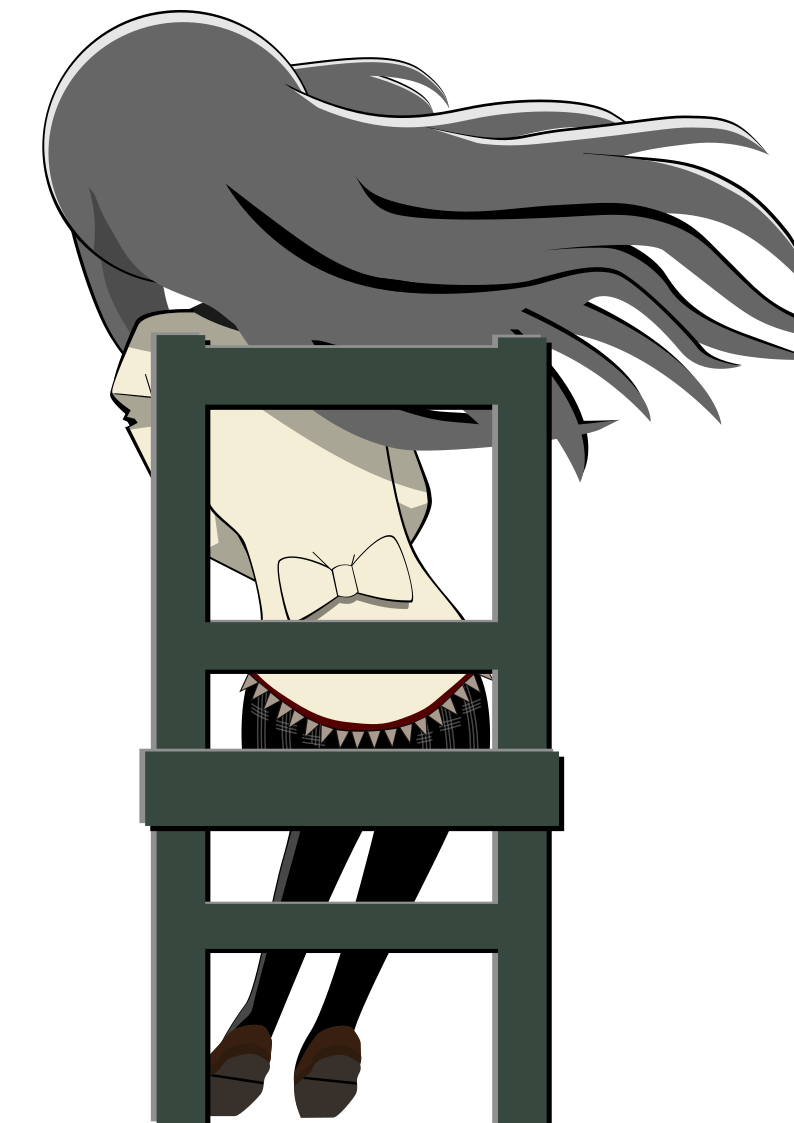
Magical Girl Homura Akemi
Contents
Preface
This work is deeply personal — I want to tell you what Madoka Magica means to me. I feel like this form is the one that manages to transmit and capture what I want to say without losing itself along the way.
As such, please follow me to the bottom; this is the culmination of a decade of my own research and thought.
Some may say that it is madness to invest such effort into analyzing a magical girl anime. To them I will say that what truly is madness is that the world overlooks it, that people can see something like that and remain cold. That they can just walk past. I couldn't — I stayed, looked, listened, searched, sought and finally found.
I simply couldn't let it go; this journey to figure it out and put it into words was so meaningful to me that it’s impossible to overstate. Therefore it is not just an analysis, but it’s also my very own personal testimony.
I wanted to do three things at once:
- To put into words what Madoka Magica: Rebellion truly means, what AiYo is, what was achieved there.
- To explain in language how this understanding was reached, the frameworks and the trains of thought that lead there.
- And finally, to give my own personal testimony and to tell my own story.
To do all of that in a single piece is almost too much, almost impossible. I struggled to make it work for so long, but finally now it is here.
Methodology
You will notice that oftentimes I equate the sign and the signified thing. This is not an accident or an overstatement based on ignorance, but it is a deliberate assertion. I am tired of pretending like associations and references are merely stylistic or that resemblance is merely coincidental. Fundamentally, I came to the conclusion that stories manifest archetypal truth and that archetypal truth is primarily structural. Across mythologies, systems and stories, the same fundamental „things“ recur, and the amount of things that are worth saying is much more limited than we often give it credit for.
I do not mean to say that things are the same in all aspects. But what I want to do instead is to point out that, in the way that the story is meaningful, and in its meaning related to reality, it is primordially and archetypically the same underlying thing.
It is the same symbol, the same metaphor.
We are living right now in the postmodern era. Symbols have been deconstructed, reconstructed, reduced to their base essentials. Yet, something genuine and true can never be extinguished from them. That is something that I believe, that I see.
By using that type of language, I remove myself from the purely academic playground.
And that is okay — I do not mean to prove something to those who do not want to listen.
I want to give and show something to those who want to find, to see more:
More patterns, more meaning, more beauty.
I merely stand here and I point out what I see; it falls to you to look and see for yourself.
On the death of the author
I meant to finish this piece before the release of Walpurgisnacht Rising, but I ran out of time before I could publish it. I couldn’t sensibly rush it, so we ended up with what we have here. The release recontextualizes much of what I wrote — and especially the authority I have been writing with. But if I am honest, these circumstances give me the freedom to truly claim what I wanted to claim all along.
There is this notion that „the text“ itself and the authors have some kind of supreme transcendent vision that a mere viewer cannot fully approach, or which supersedes any interpretation and even the symbolism and philosophy that exists within the work itself.
I firmly stand on the ground that a work of art fundamentally is to be interpreted neither from the perspective of the author nor from the perspective of the beholder — but from the collective cultural unconscious of our society and the absolute perspective of structural truth itself. Therefore, fundamentally, a metaphor means what it means, not what someone thinks or what the author means. The author cannot just declare that obvious parallels do not exist because he did not consciously intend them. An author cannot truly „own“ a story, even if he wrote it. Instead, the story is a responsibility; it is a living thing that he is merely a steward of.
Endless sequels and endless continuation are impossible as every story that is worth telling has a beginning and an end. That is unavoidable, and no man can do anything to escape this fate.
In that, the sequel, whatever it is — and I have not seen it yet at the time of this writing — is to be seen as a proposition. Gen Urobuchi said in an interview that he had no more ideas.
That makes sense: Because Rebellion is already a perfect ending, saying more is extraordinarily difficult. But being forced to say something more is in itself a curse.
In time I shall consider their proposal and evaluate.
Not that I or my conclusions are infallible — I am a fallible man like you and everyone.
Yet things are greater than merely the author, and as such he has no inherent right over them. Especially not when his hand is forced by a giant corporation seeking profit over art. As such we will see what the sequel will bring, for better or for worse.
„Cursed is the man who trusts in man and makes flesh his strength, whose heart turns away from the Lord.“
— Jeremiah 17:5
This world is beyond saving
We begin with the conclusion that Paul gives in the New Testament as to the nature of man.
As it is written:
„There is no one righteous, not even one;
there is no one who understands;
there is no one who seeks God.
All have turned away,
they have together become worthless;
there is no one who does good,
not even one.“
— Romans 3:10-12
The original series of Madoka Magica does one thing that I want to emphasize here: It establishes a baseline. At the very end, Homura draws a sobering conclusion:
Homura: „This irredeemable world may be nothing but a cycle of sadness and hatred…“
— Episode 12
This is not a statement of a disappointed defeatist — far from it. This is a conclusion which is drawn soberly and unbearably. It is the conclusion which the audience is supposed to draw. One that no one — least of all Homura — wants to draw.
It is very hard to grasp the conflict which lies at the heart of Rebellion without properly understanding the magnitude of this point. It is the very premise that lies beneath both its setting and ending.
In this chapter, I want you to understand why Homura comes to this conclusion.
I want to go even further and say that it may even be the central point of the original series of Madoka Magica.
However, I have often heard the claim that the ending of the series was in fact a happy one, instead of the absolute tragedy that it is.
I find that astonishing, but I end up coming to the conclusion that such a perspective must arise from living in a world where fundamental existential questions, which are equally applicable to the real world as well, are perpetually avoided.
At the end of the series, what arises is something innate to our modern world: The lie of cheap grace — a false idol of death, cheap grace, the enemy of life itself. This happens when we stop asking questions:
Where do Magical Girls go once Madoka takes them? What are the existential consequences of living in Madoka's world?
We are often so accustomed to this counterfeit salvation — to a symbol that lets us avoid thinking about death — that we no longer notice that something was lost, or that there remains an unresolved issue. Or maybe it’s just the „normalcy“ of the mundane world which drowns out our thoughts with noise.
In order to understand Homura, we need to see what she sees. Clearly and without looking away.
You would probably still be living in caves
The world seems ordinary, but under the surface it is governed by different laws than the ones that people understand.
It is firmly established by Kyubey:
Madoka: „What if you never came to our planet at all?“
Kyubey: „You would probably still be living in caves.“
— Episode 11
Think about what he is saying right there, the terrifying implications. If humanity had never progressed at all without their wishes, then it implies that the true motor of human society and of progress is magical girls. Everything you do, everything you think you are, is made possible to exist by the wishes of magical girls — at the cost of their souls.
If it truly means that human society is progressing only because of this intervention,
then humanity is incapable of advancing on its own. As a result, the actions you or anyone takes to advance humanity are meaningless in the large sense of it.
From an existential point of view, there is a shadow looming over all of reality.
This is not merely a facet, but at the very core of our conception of ourselves and our relation to society.
The reason why Kyubey is doing something like this is explained in this dialogue:
Kyubey: „At the moment when your Soul Gems flare out and turn into Grief Seeds, a tremendous amount of energy is produced. As Incubators, it is our job to collect that energy.“
Madoka: „... Are we just disposable energy sources to you, then? Are you saying we should just die for you?“
Kyubey: „Do you have any idea how many civilizations coexist across the universe, and how much energy they consume in a single second? Eventually, even you humans will be able to leave this planet and join us. When that day comes, you wouldn't want to venture out into an empty, desolated universe, right? In the long run, this arrangement benefits mankind as well.“
— Episode 9
The earth in Madoka Magica has been in the energy-generating business since humans used to live in caves. The statement that „humans would be living in caves“ without the Incubators is absolutely terrifying. And it is made much worse by the montage that follows it, where Kyubey shows to Madoka not only one incident but all of history. This strongly implies that ALL of human progress and ALL of history were centrally based on Witches and Magical girls. Without their intervention, human society would not have advanced.
Fire has been given to humans because of Magical girls.
It is therefore reasonable to assume that all or most inventions have been made because of magical girls. This implies that human understanding and potential are vastly miscalculated and overestimated.
In the world of Madoka Magica, humans are incapable of progress independently. And our supposed capabilities and the things we as „human beings“ are proud of are lies. We have never achieved anything ourselves.
History has been going from one bloodbath to the next, from one disaster to the next. And here is what is fact in the world of Madoka Magica:
Most or ALL advancements of history would have likely been impossible without the sacrifices of magical girls. To the uninitiated, it may have seemed different, but primarily it was done through magic.
And in an equal amount to the blessings, curses spread through the world. Causing untold destruction and strife. Who knows how much of known history is reliable at this point?
This is an element of the setting which is hard to understand in its significance, as many stories feature a secret order to the world that eludes the general public. But rarely is its fundamental reality so tragic or so transvaluating of existence as in this case. This implies an exceptional existential disaster.
The earth is a cattle farm. All of that has been done in order to provide the Incubators with energy. And they never ever cared about any of them. About humans or humanity, nor about magical girls.
You are just cattle.
This is also not my interpretation or dramatization of it. The four runes written in the image attached are „Vieh“. This is German and literally translates to „cattle“.
This is how humanity is viewed by the Incubators.
Magical Girls are human sacrifices
Now imagine living in this world of Madoka Magica: You are living your life, thinking that you are contributing. But you are living in an illusion. More to the point, this illusion is run on human sacrifices.
After all — all the comfort of modern life has been bought with the sacrifices of Magical Girls.
A public ritual is gruesome and abhorrent to our modern tastes. But never forget: People actually used to sacrifice their children. And let me be clear: What is happening here is, except for the public spectacle, exactly the same, the same moral abomination.
It is comparable to an Aztec society which offered its children up to their bloodthirsty gods to ask for a plentiful harvest.
But there is no offering; there is no harvest. It is happening unknowingly. What is valuable to you? Your family? Your daughter may just end up as a human sacrifice. Is it stability? All human affairs and wars and peace are dictated by the whims of witches and magical girls; all means of controlling disasters are just lies made to make you feel comfortable and sleep quietly without noticing anything wrong.
And the people aren't aware; they are blinded to the truth. Their children are sacrificed to an alien god — or rather to a demon, who never cared about them, and they do not notice — what good could any comfort or illusion be in light of this? What reason could there be to allow such a world to persist?
I would argue that the meaninglessness in the absence of god is the same one as the one in Madoka Magica, as — and here is the thing — if you look beyond all the fantastic concepts, you will soon notice that all of them are just metaphors for real things: For the real horror of absolute reality.
Madoka Magica contains within it countless allusions to Faust. And if Madoka is often associated with Gretchen,
and Homura with Doctor Faustus himself, then Kyubey is undoubtedly the Mephisto of this story, sharing many characteristics with him.
Mephisto is the demon who offers Faust his bargain. This is explicit as Faust is quoted many times in the runes and the character names. Among the many parallels is that Homura's power is to stop time, just as it was Faust’s wish to stop time if he ever experienced a moment that he would hope would last forever. This is of course a twist on that bargain.
If you are familiar with the story of Faust, then you will know that Mephisto appears not as a dangerous-looking demon, but as a nice and helpful servant who
seems like he is giving Faust a fair offer. This is similar to the way that Kyubey appears to the magical girls. Offering them a wish and magical powers in return for becoming witches and burning up their souls for energy — only that he conveniently leaves out that last part.
Going back even further, even Mephisto in Faust is actually already created as a stand-in for Satan, the Devil. And the whole situation with Mephisto tempting Faust is actually a reinterpretation of the temptation of Job in the Old Testament. What is especially striking are the parallels drawn during the „Prolog im Himmel“ in Faust where Mephisto goes before God and asks to tempt Faust. The situation that this references and reimagines is:
„‚Does Job fear God for nothing?‘ Satan replied.
‚Have you not put a hedge around him and his household and everything he has? You have blessed the work of his hands, so that his flocks and herds are spread throughout the land. But now stretch out your hand and strike everything he has, and he will surely curse you to your face.‘
The Lord said to Satan, ‚Very well, then, everything he has is in your power, but on the man himself do not lay a finger.‘Then Satan went out from the presence of the Lord.“
— Job 1:9-12
Therefore Kyubey in this story is the Devil.
But why is he so powerful then, and behind everything? Just as God allowed him to do as he pleases to Job, but setting him limits — that is a general Christian Truth.
In fact, the Bible often calls the Devil the God of this world:
„The god of this age has blinded the minds of unbelievers, so that they cannot see the light of the gospel that displays the glory of Christ, who is the image of God.“
— 2 Corinthians 4:4
and
„For our struggle is not against flesh and blood, but against the rulers, against the authorities, against the powers of this dark world and against the spiritual forces of evil in the heavenly realms.“
— Ephesians 6:12
In that we can see that this is precisely the way to understand the character of Kyubey correctly: He is the devil, the God of this world. In the Bible, we see that God is absolutely sovereign, and the devil is powerless against him; but from humanity’s perspective it often does not appear so. When tempted, it is the devil himself who appears as tempter; but God often works through his sovereignty. In the setting of Madoka Magica we never see God interfere directly, but, strictly speaking, this does not mean that he is not present. But nevertheless, Kyubey, as he presents himself, is a physical God of this world.
This world is a desert
One motif that much Christian writing often emphasizes is that „This world is a desert“ and that we are merely wandering through it, and do not belong here. That most primordially has to do with the notion that this world is fallen; but because of this fallenness there is something wrong with the world.
Madoka Magica does not create a purely arbitrary fictional world. Its most fundamental subject is existential conflict; it does not establish a fictional metaphysics in order to create something alien or extreme — it establishes it in order to actually become capable of genuinely depicting the real world. The world of Madoka Magica, with all of its horrors, is not more wrong than the world we live in. It is isomorphic to it: An accurate representation with different means but equal existential weight.
Homura sitting in the desert. This scene is from the opening of Rebellion, which is called „Colorful“. Madoka made the world — which started as a desert — colorful to Homura. Once she is gone, the desert is all that remains once again. This references many things at once.
- It describes that Homura has no attachment to the world on its own.
- It describes that the world really IS a desert once you strip away the „meaning“ which is always something transcendent.
The world being a desert is again something that is used frequently by Nietzsche, as he described the loneliest desert as the place in which the burdened spirit goes to fight the hardest battles.
In Nietzsche’s sense, the loneliest desert is the place where all values go to die, as the spirit fights against all the „thou shalt“ of this world.
In the Bible, the desert is referring to the 40-year-long journey through the desert where the Israelites wandered through the desert.
Incidentally, the desert is also where Jesus was tempted by the devil 3 times — but he resisted all of them.
The desert is an image for this world: To wander through this desert is the life of a Christian, looking at that which is beyond this world.
„They only saw them and welcomed them from a distance, admitting that they were foreigners and strangers on earth.“
— Hebrews 11:13
Madoka's futility
Now we have established the setting and premise of Madoka Magica.
Going from here, let us look at the ending of the original series, as this is probably the pivotal event in the entire story.
The thing that may be overlooked, but which is so crucial to understand, is that this is the conclusion that Homura herself gives to what has just happened:
Homura: „Just because Witches are no longer born into this world doesn't mean the curses harbored by mankind have ceased to exist. The distortions of the world have merely changed form, and now prey on people from the shadows.“
— Madoka Magica Episode 12
Notice how Homura puts it:
Homura says that curses are harbored by mankind and did not change.
What many people implicitly assume to be the case in the universe of Madoka Magica is that Kyubey is the origin of all curses. And yes, he does tempt people into it — but in general, the true origin of curses is man.
The system of witches and magical girls is therefore merely a form. And yet the core is something else. This seems to implicitly be in line with something very close to the biblical notion of sin:
„Wherefore, as by one man sin entered into the world, and death by sin; and so death passed upon all men, for that all have sinned:“
— Romans 5:12
From that, Homura draws a staggering conclusion. This line has many different translations, so I will go over the exact meaning:
Homura: „悲しみと憎しみばかりを繰り返す、救いようのない世界だけれど—だとしてもここは、かつてあの子が守ろうとした場所なんだ‘“
— Madoka Magica Episode 12
The first part literally says that this world is filled with hatred and sadness, and that there is no possible way to save it. In short, a twofold conclusion is reached:
- This world is irredeemable.
- The cause of this is endemic — it is inherent in the structure of this world as it is now.
A common theme that people ascribe to the ending of the original series and seem stubbornly convinced about
is that Madoka saved the world. It is astonishing that this notion is so commonly and so deeply held among many viewers.
It is a symptom of easily being swayed by the form and appearance of something, instead of looking at the deeper
subject matter at hand.
Madoka managed to change the form which curses take. And perhaps Magical girls aren't suffering to the same degree anymore.
But this stands in stark contrast to the judgment that the show itself gives about it through Homura (fully translating the above Japanese):
Homura: „This irredeemable world may be nothing but a cycle of sadness and hatred — but even so, this was a place she once tried to protect.“
— Madoka Magica Episode 12
Homura recognizes that the tragedy of the world and the state it is in — despite what Madoka has done — is so great that it is hopeless.
This mirrors the conclusion that God reached about the world when he sent the great flood:
„And GOD saw that the wickedness of man was great in the earth, and that every imagination of the thoughts of his heart was only evil continually. And it repented the LORD that he had made man on the earth, and it grieved him at his heart.“
— Genesis 6:5
Indeed, in both cases, there is something found: Noah finds grace in the eyes of God. Similarly, Homura says: this is a place she tried to protect.
With this, Homura says that the way she judges the effort of Madoka by is the intention. She does not say: this is the world she now protects or protected. She says that she merely tried.
Homura says:
The reason why it is precious is because Madoka tried to protect the world.
Admittedly, she does not say that Madoka failed, because she did not quite.
But it is surely not the salvation that many viewers — and as we will later see, many of the magical girls themselves — ascribe to it.
Homura values the world now because Madoka fought for it.
Homura: „I remember that. And I will never forget it. That is why — I'll keep fighting.“
— Madoka Magica Episode 12
The reason why Homura keeps fighting is because she remembers Madoka — it is in her honor. It is not for herself.
Therein, the ending of the original series is a complete and utter tragedy.
It is devastating because Homura is just one girl against a doomed existence. All she can do is fight to honor Madoka.
When she goes to fight into the desert, the text reads:
„Don't forget. Always, somewhere, someone is fighting for you. As long as you remember her, you are not alone.“
— Madoka Magica
If you read it from Homura’s perspective, it is a mockery: How is Madoka really fighting for Homura? Homura is the saddest and loneliest magical girl on the planet. And all because she failed to protect Madoka and lost her best friend. In that — how exactly is Madoka fighting for her? Even if Madoka is a law that may also cull Homura one day. That does not really amount to fighting for her. It may seem like this is the case for other magical girls who never had a personal relationship with Madoka — but absolutely not for Homura. And if you look at Homura’s own quote from Rebellion, you will see that „as long as you remember her, you are not alone.“ is an even greater mockery. As long as Homura remembers Madoka, she is damned to be alone and to live all her life in her honor. Homura explains just how unbearably lonely she was, how she doubted her own memory. If anything, this is a cruel and hollow cosmic joke.
And yet it is exactly right if you look at it from Madoka’s perspective: Homura still — even now — fights for Madoka. And Madoka herself said that she won’t be lonely, since she will see all timelines; in other words: as long as she remembers Homura, she won’t be alone.
The irony is that many people of the audience find this ending to be wonderful:
Madoka died for others — therefore it is wonderful!
Yes, Madoka did sacrifice herself. But Madoka is not Christ — she could not save the world. And she did not rise from the dead. She is now a concept that erases Witches.
What Madoka gained for her wish, i.e., the exact mechanics of what that entails, is another common confusion. This is one particular moment where people are desperately clinging to the appearance:
Madoka: „I want to erase all Witches before they are even born. I will erase every single Witch in every universe, past and future with my own hands.“
— Madoka Magica Episode 12
What that should mean in practice is that Madoka ANNIHILATES the Magical girls before they become witches. Somehow the notion stuck that Madoka takes them away to heaven. But that is what people always like to think.
„Everyone who dies goes to heaven.“
— many people when someone died.
The biggest objection to this is that somehow Sayaka and Bebe appear in Rebellion, people who Madokami took away once. Given the upcoming movie, anything can be retconned in at this point, but the way it was always implied to work and looking at additional material like Magia Record and interviews, the most likely way this is reconciled is that Magical Girls that are taken away are kept merely as a record, or as information. Under extremely special circumstances, they can become manifest as in Rebellion. But this is far from a normal occurrence.
Evidence that seems to support this is, for example, the concept movie which lists all the things which amount to „happiness“ but that „heaven“ contains nothing of it. Madokami is a pseudo-Buddhist concept: Non-existence.
But non-existence for all purposes is just death, no different from the death of any other person.
Therefore, I will treat them as interchangeable. What it almost certainly is not is a kind of heavenly existence in bliss as many imagine it.
Madoka is a concept now that erases witches.
Nothing more, nothing less.
The good that she genuinely managed to achieve with that is that Magical Girls, after fighting for hope with their own hands, no longer have to cause suffering and curse others. This evil, in particular, is what Madoka set out to correct. And here she did succeed. But in a very limited way.
The evil that they cause goes away with them, as we have learned.
Madoka replaced one evil with another by removing the effect without the cause — which caused the niche of „spreading curses“ that was occupied by the witches before to be filled by wraiths. As it is narrated: The curses harbored by mankind still exist and now „merely take a new form“.
In Rebellion, we see how Madoka is now worshiped as a Goddess by the magical girls. She is called „the hope of magical girls.“ But there is no hope here; there is only death.
This is why in Rebellion we see the writing: „SIE VERHERRLICHEN DEN TODV“ — They are worshipping death. (pic attached)
This is a double meaning:
- This, of course, summarizes the perspective Homura has on Madoka's sacrifice.
- But at the same time, it also refers to the fact that Madoka does not bring salvation but just death.
Maybe someone will say now: It's not clear enough — maybe it's just the former? There is actually another one which is even more clear on the Wallpaper Witch Runes, all in Japanese:
Closed window right:
SYOU METU KYU USAI —
Annihilation (消滅 Shōmetsu) Salvation (救済 Kyūsai)
Surrounding winged feet:
SORE GA MA HOU SYOUJO —
This is a magical girl (それが魔法少女 Sore ga mahō shōjo)
Open window left:
ENKAN NO KOTO WARI —
Law of Cycles (円環の理 Enkan no kotowari)
Surrounding outstretched arm:
KI SE KI —
Miracle (奇跡 Kiseki)
It's basically making clear: There is an implied association between annihilation and salvation. But Annihilation is not Salvation; it is just death.
The imagery in this scene is perfect. With Homura kneeling at Madoka’s feet and crawling at her. But the familiars are throwing tomatoes at her, saying: Gott ist tot! Gott ist tot! And the burning ship with people drowning and falling into the water with everything sinking. This together perfectly describes what has happened and how to understand it:
The burning ship is the world and its condition. It is a tragedy without helpers, and everyone is mercilessly drowning in the waters. They jump overboard when all that awaits them is a cold grave; there is no salvation.
A burning, drowning ship is a visual representation of a counterfeit salvation:
In Christianity, Noah’s Ark is that by which his house survived while the old world drowned.
A burning ship sinks:
It is tragedy — the first world perished in water; the next one will perish in fire.
Drowning and burning, no escape, no salvation.
„They are glorifying death“ is a reference to Nietzsche’s Antichrist where he describes Christianity as a religion that glorifies death, a religion of death, all Christians as nihilists.
Nietzsche viewed Christianity as anti-life, because it is so focused on an afterlife.
In that, it denies this world for the purpose of the next. But — and there he is right — that only works if there indeed IS a next world.
But what if there is none?
What if this world is all there is?
Denying this life for the next is then like going on a burning ship: The ship is the faith. And yet it fails.
Thus leading to death instead of salvation.
According to Nietzsche, the primordial noble thing is the noble man, and Christianity extinguishes that nobility through its focus on the hereafter. According to Nietzsche, Christians do not actually care that there is no such thing; their true motive is resentment and weakness: Clinging to a futile hope because they have nothing else. Therefore arriving at slave morality and finally the last man.
This critique was written addressing the Christianity of his day, which was the state Christianity of late 19th-century Germany. It swore on the emperor before Christ. And it offered salvation for all through easy believism. Which is exactly the thing that the magical girls in Madoka Magica are practicing: They are embracing an easy salvation without recognizing that it’s actually annihilation. And that there is no hope there. Instead, they cling to a false image. Because that is easy and comforting.
This is what the thing Nietzsche was criticising was like. In this corrupted form, Christianity is truly the slave morality that he despised so much. It offered salvation to all indiscriminately, and therein it is truly a religion of death, as in that there is no salvation. Of course, this has nothing to do with God or the Bible which teaches that God will redeem ALL things, and not just offer a cheap escape from this world. Christ calls his followers to sell everything and follow him. Which is a kind of existentialism, which — ironically enough — is very close to the things that Nietzsche admired.
Nietzsche was an existential philosopher who sought to overcome the decay of his age by any means. In his hatred of Christianity, I find it hard to miss his certainty in diagnosing it to be one single thing, an account where he is mistaken. In that I can only conclude that the thing that offended him so was that which appeared before his own eyes every day, a fake which he took at face value as the real thing.
As such, we now get this scene:
Homura is standing at Madoka’s feet and is trying to grasp them.
This is again a biblical motif — John the Baptist says that he is unworthy to even wash Jesus’ feet; and yet Jesus washes the feet of his disciples.
Homura can’t grasp Madoka’s feet; instead there are scratch marks on the image. Showing that she clawed and failed.
However, the other familiars are mocking her as „good for nothing“ and are throwing tomatoes at the image of Madoka declaring „Gott ist tot“ (God is dead).
In this context, it takes on multiple meanings:
First. They are glorifying death, but God is dead. Homura recognizes that the salvation in death through Madokami which they are hoping for is something that she does not believe in, and rightfully so because she knows exactly what Madoka's wish actually was. This is a true sense in which Nietzsche’s statement „God is dead“ is absolutely true, even within the very concept of Christianity. For example, the God of Cheap Grace IS dead. It is a dead God that never existed, and who has nothing to do with the God of the Bible, and worshiping him leads to eternal damnation. The second death. Knowing the Bible — leads to rejecting this counterfeit salvation.
Second. The immediate context is that in that situation the world they are living in, without wraiths and where they do not fight, is a mockery that dishonors Madoka’s sacrifice. Therefore the tomatoes and God is dead. Here „God“ is the God that Homura was living for until now: The „God“ who is Madoka herself, essentially the idol Homura made of Madoka in her heart to honor her. Homura is realizing, after having just talked to Sayaka about it — though she does not yet admit it — that to live with Madoka and the others like this is more important than to honor her sacrifice or anything like that.
Third. The Madoka that Homura is grasping at is now merely a dead concept. Therefore God is dead; or rather Madoka is dead — but Madokami is dead as well; just in a different sense.
This basically is a multifaceted perspective:
The Law of Cycles salvation as „God“ is dead because it is merely to glorify death. The legacy of Madoka as a „God“ — which is what Homura said at the end of episode 12: „this is a place she once tried to protect“ — as a God is dead because Homura herself is now living a mockery of that concept. And finally, Madoka herself as a „God“, that is, as Homura’s purpose, is dead because she became a dead concept.
Nietzsche said in Twilight of the Idols that he philosophizes with a hammer; he rings all the idols and hears them sing — by shattering. And so nothing again remains. And as all those dead „Gods“ die and are revealed to be „Idols“ all along, the illusion will soon begin to crumble.
Homura remembers what the world she lives in is like, and what the existence of this illusion means. While contemplating all those realizations of this chapter, as they are coming back to her one by one, Homura now rides down the boat into the depth of the abyss. Mirroring the journey on the river Styx while being ferried into the underworld.
As such, we have seen the full state of this world.
It is so important to keep this in mind when we look at the things that happen next.
The country of sweets
What I wrote in the first chapter is meant to set the groundwork.
I want you to understand how bleak and how bad the situation actually is. Without that you may not grasp and even less appreciate the monumental achievement of what Homura did — what her rebellion amounted to.
Homura is lying there, and when Madoka reaches out to free Homura, the symbol of Madokami is depicted, and beneath it is written: „Das ewig Weibliche“ — which means „the eternal feminine“. This is a reference to Faust 2; the final scene is the burial of Faust, where Mephisto thinks that he will now claim his soul, and yet Faust is saved and taken to heaven.
A somber conclusion that is repeated again and again, in fiction and our culture. A cathartic ending: Faust has found redemption in some way, and now he is dead.
But not this time. This time alone, among all the stories, something different happens. This is that amazing thing which makes Madoka Magica special.
This chapter is dedicated to Homura's victory and what it cost her. It stands in contrast to the previous chapter’s darkness.
Homura's tenderness
In order to appreciate the price that Homura paid for her rebellion, now let us look at who Homura is as a person.
A lot of the series’ more subtle aspects are characterizations of Homura. Homura, more than anything, is an incredibly gentle and sensitive being, but also someone who doesn't really have a voice to express herself clearly. In this, a lot of it is lost on both the viewer and on other characters. Homura's voice is lost in translation, and we need to go and look for her. During the series, we often see Homura as she is perceived by others without having her internal monologue. Only in Rebellion do we finally gain access to „her world“.
Homura begins in episode 10 as a timid girl with a heart condition, who transfers to school and neither fits into society nor has a real place in it. Madoka tells her how cool her name is. It means „Flame“, but she does not live up to it.
In the next scene, she is wandering through town in a depressed state, contemplating the meaninglessness of her own life and how she is just a burden on everyone, which culminates in her wandering into a witch’s labyrinth and being attacked by familiars.
A keen observer may notice that this is an oddly fitting manifestation of her inner world at this point.
Then both figuratively and literally, Madoka and Mami break into this labyrinth and destroy the witch.
By encountering them, Homura gets introduced to the world of magical girls. Simply by having a connection to them, it uproots the meaninglessness of her existence. It is surprising that Homura does not immediately wish to become a magical girl to be with them in their quest.
The death of Madoka and Mami in the second timeline is encountered by Homura both as a devastating tragedy and as a chance and a challenge:
She can now become someone useful. She can now help them.
This is what „I want to be strong enough to protect Madoka“ really means at its bottom:
I want to stand beside Madoka. I want to be useful. I want to earn my place there.
In the second timeline, Homura therefore encounters Madoka with excitement. She is now here to protect her. It's who she wanted to be.
It’s tragic to consider the scenario that Homura had imagined her life would play out as at this point:
Madoka and she would defeat Walpurgisnacht as heroes. They would have together protected the town. And then they would continue protecting the town together as magical girls.
It all came crashing down when Madoka turned into a witch after their battle with Walpurgisnacht.
In the face of the reality surrounding them, Homura did not break, but what was even harsher on her than the realization itself was how her friends and allies other than Madoka completely lost it in the face of the horrible truth.
Sayaka did not believe her, and in the end turned into a witch and died.
Mami even went postal upon finding out that magical girls truly DO turn into witches and tried to kill everyone and herself before Madoka — in an astonishing display of sobriety — put her down.
After defeating Walpurgisnacht together with Madoka and being completely out of energy, Homura is ready to curse the world itself.
Homura: „Hey...
How about we become monsters together...
and lay waste to this awful world?
We'll wipe out everything...
all traces of evil or sadness...
and just destroy, destroy, destroy...
until there's nothing left but dust.
Don't you think... that sounds nice?“
— Madoka Magica Episode 10
Everything seems shattered, and it looks like there is no more hope. Because no matter what they do, as long as the magical girl system exists, they will always remain cursed under it. And no matter how many people they save, it will always balance out at zero.
So what is the point? Such a world cannot be saved.
Madoka instead asks Homura to shoot her soul gem so that she does not become a witch, because she does not want to curse or kill anyone. And then to go back in time to prevent Madoka from ever making a contract with Kyubey.
For Homura, having to kill Madoka represents a terminal break from society and conventional morality.
Everything has failed in this world, and there is no hope for anyone who has made a contract with Kyubey.
This includes herself.
Her naive dream of standing next to Madoka is terminally shattered here. She can never possibly stand next to her. Instead she must make sure that Madoka never becomes like her.
But that she instead remains the girl she always was before. Even if it means becoming a stranger to her.
Homura is condemned to a life of loneliness. Madoka must be shielded from becoming a Magical Girl — thus is their promise.
And Mami and Sayaka cannot be trusted because they are too emotionally volatile to handle the truth of the world.
This leads to the conclusion: „I cannot rely on anyone anymore.“
The one exception from that rule is Kyouko, whom Homura sees as a reliable accomplice when their goals align.
We do not know the exact reason, but in her loops Homura never develops a bond with Kyouko either. It’s likely because of the nature of the Magical Girl system which makes magical girls fiercely competitive over scarce resources. And because of her own past experience.
In that, all that is left for her is to protect Madoka from the shadows.
When Homura is warning Madoka, she is not being coy.
From her heart, she wants to warn her. Yet her past experience has taught her that being even more direct will not be understood and she won't be able to convey the actual danger. And if she manages to do it, then it leads to a bad ending because everyone will go mad from the revelation.
When rewatching the series again after knowing the truth, it hits completely differently. Homura's harsh expressions are filled with an incredible sadness and alienation. She has seen these people again and again, and has seen them die, helplessly unable to change their fate.
When Mami is being hostile to her, it's not a stranger who is protecting her territory. It is a friend who has forgotten her. Homura has given up on being understood. Trying to save Madoka alone is not a result of her caring only about Madoka and no one else. It's that everyone else seems so distant and so hopeless that saving them is impossible.
It's the more subtle details which yield a proper characterization of Homura.
When Homura turns around and reaches towards Madoka in the clip for Magia, she gently turns after her and reaches out her hand helplessly.
The song which plays at the end of Episode 10 is the main opening of Madoka Magica. It is Connect. It reads:
„Even if I come to a standstill on a difficult road
The sky is always waiting for me in a beautiful blue
So I'm not scared
By now, no matter what happens, I won't get disheartened
(...)
I won't forget the promise we made
I'll close my eyes and ascertain it
Shaking off the darkness that closed in on me, I advance on
Because no matter how great of a wall there is
I'll show you I'll overcome it, so I'll certainly
Believe in tomorrow and pray“
— Madoka Magica, Connect
It's from Homura's perspective as so many songs in Madoka Magica are.
After Mami died, Homura went to Mami’s house to comfort Madoka because she knew Madoka would be there. She probably had the same conversation with her numerous times. Homura understands what it means to blame herself better than anyone. And she does not want Madoka to feel the way she herself does.
A surprising line in Connect is this one:
„When I look back, I had friends
When I noticed it, I was gently embraced
In the world where just about everything is twisted
Having the single place here I can believe in saved me“
— Madoka Magica, Connect
It says „friends“, as in plural.
Homura often gets painted as someone who cares little about anyone except Madoka. But look at her actions:
In all the confrontations between Sayaka and Kyouko, Homura constantly intervenes and saves Sayaka multiple times.
Please consider this in the context of the time loop: Homura has never once seen Sayaka act reasonably, and she knows that Sayaka will run into trouble with Kyousuke and then cause a huge disaster for everyone. She is trying to help her, even though she knows that it’s futile. It must be unbearably frustrating.
Even in the scene where Homura „tries to kill“ Sayaka, it’s pretty clear that she is trying to scare her into getting her act together.
She brings her a grief seed so that she can recharge. But Sayaka just foolishly rejects her. It is stated in an interview by Gen Urobuchi that Homura has seen around a hundred loops. She knows how Sayaka will act by now.
Homura has the power to stop time. At any point, she could just stop time and put a bullet into Sayaka’s soul gem. No one would notice. But Homura does not even think of doing something like that.
Even in her monologue about Mami, Homura says this:
Homura: „Yes, I remember Mami Tomoe now.
She always troubles me.
She would put on a strong front and go all out.
But she has the softest heart of any of us.
Revealing the truth was always hard for her there.
Shadowing her optimism... It felt cruel, and it's hard to me.
I remember now, and I wish I could erase the memory of all the hearts I broke.“
— Madoka Magica Rebellion
There is not a hint of gloating or satisfaction there. It's just sadness — someone whom Homura could not connect with.
Someone too fragile, who could not be saved. And yet even here, Homura still blames herself. It felt cruel to deal with Mami in any way, because Mami was living in a world of delusion. And Homura always brought the truth which shattered her naivety.
It is cruel because there is no salvation for Mami. But Homura does not let that stand as an excuse: It is cruel either way. And Mami hurts either way.
When Homura says that she must be creeping Madoka out, it’s because she understands that she herself to her is a stranger who appears and gives cryptic warnings.
Someone who stands at her window at night like a ghost.
Madoka has never invited her into her world in this timeline. They have become strangers because this Madoka never knew her.
What Homura wants, her heart’s desire, is shown during the first half of the Rebellion movie.
This is what Homura wishes for, more than anything in the entire world. To be just an awkward girl, because that is what she sees herself as even now — but amidst her friends who care for her and who accept her just like she is.
For Mami to no longer be alone but to live with someone close. For Sayaka and Kyouko to just go to school as ordinary friends. For Madoka to be with her family and friends and to be happy every day.
And even then, Homura is not some special hero everyone admires — even though it is her own dream, her fantasy, anything could be possible.
Even Sayaka admits: The person who wished for such a world cannot be evil.
It is a gentle world, a kind world. A world in which magical girls can be what they are meant to be. Where they can be together.
And for Homura herself? Her biggest part in this is to be around, participate, and to be connected to others.
It is not nothing. But it is not much, and it is not misplaced. It is not arrogant. It is just a little gentle thing. To have an ordinary happiness, too. Like everyone else. It seems healthy. And if anything, self-deprecating. Homura really doesn’t wish for something special.
When Madoka hugs her in the flower scene, her answer is:
„You have blessed me more than I could ever hope for“
— Rebellion, the flower scene
And with that she runs off ready to die for her.
You have to appreciate how little that is. How bleak her world is and has always been. And how little was enough to save her: „This single place I could trust in saved me.“
Homura is a person who had nothing. She is living alone. With a heart condition and stayed in the hospital for a really long time.
A 14-year-old kid being sick with a life-threatening illness in the hospital is already sad. And then she is also completely abandoned and has no one close to her. And has no friends or relatives who look after her.
And then she goes to school and people mock her behind her back. She fails at school, has no social skills, and is frail and sickly, and has to go to the nurse’s office a lot.
You have to keep this in mind when you see Homura getting estranged from her friends in the anime. These people mean everything to her. Even Mami and Sayaka who misunderstand her. But Madoka more than anyone.
Homura just accepts being misunderstood and unable to express herself. It’s a silent capitulation.
„And he called his disciples to him and said to them, ‚Truly, I say to you, this poor widow has put in more than all those who are contributing to the offering box. For they all contributed out of their abundance, but she out of her poverty has put in everything she had, all she had to live on.‘“
— Mark 12:43-44 ESV
Homura is that poor widow.
The fact that Homura is often seen as being obsessed with Madoka to an unhealthy degree, like she is selfishly keeping her for herself, completely misses the point of who Homura even is as a person and what matters to her.
What Homura values so highly are extremely ordinary little things which everyone gets daily as a common courtesy. The premise that she would want Madoka for herself is wrong, simply by the fact that her entire character depicts her as someone who feels grateful when someone just greets her and calls her name. Like those things are already infinitely more than someone like her deserves.
From Homura’s perspective, Madoka is an amazing, strong person who betters the life of everyone surrounding her. To her, she is like the sun. And yes, she does want to be in its light for a bit. But is that really so wrong and evil? It is a completely different thing from wanting to monopolize her, or have all of her for herself. Having Madoka call her name and go to school with her is Homura’s little coin, everything that she owns. It is not more than that. To say that her getting to have that is already selfish or obsessive is an unbelievably cruel and mean thing to say as far as I am concerned.
Twilight of a symbol
In the previous chapter, we looked at who Homura is and what she wants for everyone.
This stands in conflict with the choice that Madoka made to sacrifice herself and become an unfeeling abstract concept.
I find it interesting to point out that it genuinely stands not only in conflict with Madoka's choice in Episode 12 of the original anime. But it stands in conflict with the choice she makes in every single loop.
Every single time before that, Madoka throws her life away and sacrifices herself to defeat Walpurgisnacht. Leading to more or less disastrous consequences.
There are, however, multiple differences this time:
- This time it is irreversible, because it affects the entire multiverse, both past and future. Therefore, Homura can no longer travel back in time to undo it.
- It is not ruinous in the same way as it was before. In just the previous loop, Madoka's wish resulted in the destruction of the whole earth.
- The thing she creates at the cost of herself becomes an institutional concept which is vital to the universe.
- Madoka does not simply die this time.
Why does she say that this is a fate worse than death?
Because Homura — more than anyone — understands what it means to be forgotten. To become a ghost whom no one remembers and who has no connection to anyone in the world.
Madoka condemns herself to fight witches for all eternity. To become an abstract concept instead of the person „Madoka Kaname“.
This is what Homura warned her about in the hallway scene in episode 1:
Homura: „Kaname Madoka, do you value your own life?
Do you think dearly of your family and friends?“
Madoka: „Well.. uh, I... I do.
I love my family and friends.
They mean the world to me.“
Homura: „Is that true?“
Madoka: „Of course! Why wouldn't it be?“
Homura: „I see.
If that's true, then you must never think about becoming someone else.
If you do, you'll lose them all.“
— Madoka Magica, Episode 1
Instead of avoiding her fate, or having another chance, the thing she warned her about became true in the worst possible way.
The reason why Homura asks: „Is that true?“ is because from her perspective, Madoka had just thrown her life away before her eyes.
„Is it true that you value it? Because you do not act like that.“
This is what it means.
Madoka is a far more conflicted and multifaceted character than a surface reading yields. One thing that she has in common with Homura is that she does not see herself as valuable or worthwhile.
When she is talking about being a magical girl, the perspective is always this: „Can someone like me ever be someone so great?“
If Homura's naive wish in its distilled pure form is: „I want to be someone who is valued by society — in order to have a place to belong.“
Then Madoka's secret wish is: „I want to be someone who matters.“
On the surface, they are the same, but at their core they have a very different motivation.
Madoka's role model is undoubtedly her own mother. She sees her as a strong person who achieves things in the world. This is how she herself wants to be.
However, Madoka at the same time does value her friends and family. And yet, this is how it usually is: We so often only notice how much things meant to us when they are gone.
When Madoka says that she values her family and friends, then she speaks the truth. But it’s not the thing which is on her mind, which is what is driving her actions. It's what she notices after it’s gone. But in the immediate, she is driven first by the desire to matter.
It is in the third timeline, when Homura has to kill Madoka, that she understands what she lost by becoming a magical girl.
Madoka: „Could you save me from my stupidity...
before I get fooled by Kyubey?“
Homura: „I promise. I'll save you, no matter what.“
— Madoka Magica, Episode 10
This is „the promise we made“ from Connect’s first line: „I will never forget the promise we made.“ Notice that Madoka explicitly says that she wants to be saved „from her stupidity“.
This by itself already undermines much of the insistence on Madoka's agency in becoming Madokami.
There is, however, much further support for this line of reasoning throughout the series. One example is the first ending song of Madoka Magica, which is „See You Tomorrow“. It’s from Madoka's perspective. And here are some excerpts from it:
„Saying, ‚See you later,‘ I wave my hand
Cracking a smile, yet I'm feeling lonely
The truth is, I still have more to talk about
But with the words ‚See you later‘
I say we'll meet again, but it's a lie
and with my usual smile, I say
‚See you tomorrow‘“
— See You Tomorrow, Madoka Magica
This very much mirrors the ending of Episode 12 where Madoka says goodbye to Homura. It’s very likely that this ending song is describing her genuine feelings in that moment.
Next, we have the „flower scene“ which is perhaps the strongest and most explicit one.
In Homura's dream world, Homura rides down the boat — which is symbolically representing the boat ride on the river Styx into the underworld — meaning that this encounter happens at „the bottom of the abyss“.
And there in the bottom of her own soul, she meets Madoka and they get to talk again.
Homura shares with her how she experienced the world without her. Madoka comforts Homura but she says something very important:
Madoka: „You're right.
That dream does sound awful.
But it's OK now, really!
I'm not going anywhere, especially about so far away I couldn't see you again.
I'll never do something like that!“Homura: „You aren't...? But, how!? How can you be so sure...?“
Madoka: „You know how wimpy I am?
If I did anything that make someone as strong as you cry like this, it would break my heart.“
Homura: „...It will break your heart?
Leaving us behind will hurt you that much?“Madoka: „Of course it would!
I'd hate leave you and Sayaka.
Or Mami, and Kyoko...
Or my mom, dad, and Tatsuya...
Even Hitomi and all our friends in class, too!
I wouldn't go if I couldn't see you guys again.
I know I don't have the courage to do something like that, even if I didn't have a choice...“Homura: „You're right.
I know you weren't...!
(I knew what hurt you more than anything... but, still... How could have I been so stupid! I should've stop you back then... I should've stop no matter what I had to do...! I shouldn't have let that happen...!)“
— Rebellion, the flower scene
Immediately after the flower scene, we get a flashback to the hallway scene all the way from episode 1: Homura remembers that even back then Madoka always said the same thing.
It also explicitly says: „Even if there was no other choice“. Because the movie is explicitly anticipating that argument here: Even if there was no other choice, it would hurt her too much to bear.
Homura knows that there was no other choice.
But this does not mean that she will abandon Madoka now, just because it was impossible to save her before. The violet spreads through the flowers.
They wilt away, but become dandelions and fly away. This symbolizes rebirth. The violet color is influence or power. In the post-rebellion world we see a similar motif when Homura's cup overflows and the violet liquid engulfs the world.
Homura realizes that she must keep her promise, which she has yet to fulfill.
In that she reacts:
Homura: „I know it's possible that you may just be an illusion
or a false copy created by someone.
After all, how else could we meet like this again?
It's not possible, any way you look at it.
But I can tell. You are the real Madoka“
— Rebellion, the flower scene
Homura knows it’s the real Madoka. But only after Kyubey confirms that he managed to get „the Law of Cycles“ into Homura’s barrier does Homura act decisively since only then does she finally confirm that she is genuinely and truly the real Madoka.
Homura says to Kyubey: „Then it really is her?“ after he explained how it worked in detail.
This is important to point out because Madoka's feelings are often dismissed as an illusion that Homura created. But Homura waits and confirms that it’s really her before acting.
In the next scene, Homura calls Kyouko and we get a callback to the previous scene with the DDR machine: This time Kyouko is standing in the spot that Homura was standing in the last time they spoke in that place.
But this time, it is Homura's Clara Dolls, the „Children of the False City“, who are dancing.
And yet the tune is once again: I will never forget the promise we made...
The final piece of evidence I want to present at this point is what happens when Madoka finally reaches Homura and they break free from the dream world in Rebellion:
When Homura turns into a witch and we see her relive her bleakest moments, we see a hand — Madoka's hand — reach in from the window.
The window symbolizes the entry into Homura's world. And the hand goes in to touch her. Notice that this hand is full of scars.
The scene that it flashes back to after this is Madoka dying in the rain in the third timeline when they made their promise. When even then Madoka reaches out her hand to Homura. The symbolism here is that Homura remembers Madoka's kindness.
The kindness of her friend whom she lost.
This is what causes Homura to break out of it. The context of this scene is that Homura herself summoned a curse in order to drown herself in her own Labyrinth. Thereby closing off the opportunity for Kyubey to reach Madoka.
But in this, in Madoka's kindness which is so precious to her, she realizes what she has to do:
It will not solve anything if she merely dies for her. Someway, somehow, Homura understood what possibility was born before her.
In truth, we do not fully know what happened here. All we see is the symbolism:
Homura reaching the hand.
Homura: „I'm so spineless
I wanted to see you one more time.
And if I had to go so far as to betray that wish...
Yes, I knew I could shoulder any sin.
No matter what I became, I knew I'd be fine with it.
As long as I could have you by my side.“
— Rebellion
Homura decides that she must act now, for the sake of Madoka. Even if it means breaking the rules of conventional morality, and even if causality itself and logic stand against it — she will protect her, no matter what.
The silhouette of the old Homura fades away like water, washing away, and remaining there stands the Homura as that which she has become.
Madoka: „Homura, aren't you afraid?“
Homura: „No. I'm fine.
I won't hesitate any longer.“
— Madoka Magica Rebellion
The true tragedy of Faust
As we have briefly mentioned before, Homura is an allusion to Faust. In Madoka Magica, her power is to stop time — as was Faust’s bargain with the devil: if he experienced a moment of pure happiness, where he would wish that time would stop forever, Mephisto would claim his soul. In order to understand what that means, we need to briefly go over Faust and the beginning and end of his bargain.
The deal was:
Faust: „Werd ich zum Augenblicke sagen:
Verweile doch! Du bist so schön!
Dann magst du mich in Fesseln schlagen,
Dann will ich gern zugrunde gehn!“
— Johann Wolfgang von Goethe, Faust I (V 1699–1702)
It says: „Should I say to a moment: Stay! For you are so beautiful! Then you may put me in chains, then I will gladly go under!“
This is the term of the contract in Faust. That Faust may see a moment of pure happiness, something that is truly worthwhile and then for that alone, the devil may claim his soul.
The context here is that Faust is a tortured intellectual who has studied everything, philosophy, science, law, theology, and finally magic — yet nothing seemed worthwhile to him, so having become restless, incapable of crossing over into a „true world“, this is now his terminal solution.
The very ending of Faust 2 is that Faust says a very similarly worded sentence and dies after:
Faust: „Nur der verdient sich Freiheit wie das Leben,
Der täglich sie erobern muss.
Und so verbringt, umrungen von Gefahr,
Hier Kindheit, Mann und Greis sein tüchtig Jahr.
Solch ein Gewimmel möcht’ ich sehn,
Auf freiem Grund mit freiem Volke stehn.
Zum Augenblicke dürft’ ich sagen: Verweile doch, du bist so schön!
Es kann die Spur von meinen Erdetagen
Nicht in Äonen untergehn.
— Im Vorgefühl von solchem hohen Glück
Genieß’ ich jetzt den höchsten Augenblick.“
— Johann Wolfgang von Goethe, Faust II (V 11575 — 11586)
It says: „Only thus is freedom earned and life, by him who conquers it daily. And so is spent among danger: childhood, adult and old age; such struggle is what I want to see, of a free people on free ground! Then to the moment may I say: Stay! For you are so beautiful! The trail of my days on earth may not perish even in aeons! Therefore in anticipation of such highest happiness I am now experiencing the highest Happiness!“
Mephisto thought he won. Because these last words contain within them the expression from the very beginning: That he was shown a moment of pure happiness. But there is a twist here. Faust says that his happiness is found in anticipation. Not in being given something by Mephisto, but in the struggle and in striving for the highest things has Faust found his happiness — and yet even in that he only says: „THEN to that moment may I say“, meaning that he is looking towards the highest things from afar; it is not in his life that he has found the thing that he was looking for, but in the struggle itself — though it may still forever remain unattainable. Therefore, what follows after this is the burial of Faust:
„Gerettet ist das edle Glied der Geisterwelt vom Bösen:
‚Wer immer strebend sich bemüht, Den können wir erlösen.‘“
— Johann Wolfgang von Goethe, Faust II (V 11934 — 11937)
It says: „Saved is the noble member of the spirit world from evil: Whoever strives for the highest things, him we can save!“
Therefore, in striving for the highest things which are beyond this world, Faust is saved and goes to heaven. The whole thing ends with:
„Alles Vergängliche ist nur ein Gleichnis;
Das Unzulängliche, hier wird’s Ereignis;
Das Unbeschreibliche, hier ist’s getan;
Das Ewig-Weibliche zieht uns hinan.“
— Johann Wolfgang von Goethe, Faust II (V 12104 — 12111)
It says: „The temporary things are merely a parable; the unfit becomes event here; the indescribable happens here; the Eternal Feminine draws us in.“
And with that, Faust is saved and goes to heaven. God therefore wins his wager with Mephistopheles from the prologue in heaven from the very beginning.
In Faust, the story itself does something which is not Christian. Faust is saved by „the eternal Feminine“ which is explicitly not Christian salvation through Christ alone. It is a humanistic, neo-platonic concept that grants salvation to all who strive towards a vague concept of the good.
Goethe himself was an Enlightenment thinker and not an orthodox Christian. So it makes sense that this is how he would depict it.
This is also precisely the thing which Madokami represents:
A free salvation for all magical girls, a redemption that takes them all away — Salvation / Annihilation, by appearance it is indistinguishable. In truth, we do not know where she would have taken Homura — and I will give it the benefit of the doubt and say that Homura wouldn't have just perished like all the other magical girls, since she is special. But what exactly would have become of her is something which we do not really know — and it is certainly not heaven; nor is it the resurrection of the dead.
Christ says:
„Jesus answered, ‚I am the way and the truth and the life. No one comes to the Father except through me.‘“
— John 14:6
No one comes to the Father except through me; there is no salvation and no other heaven except in Jesus Christ. This is and has always been the orthodox teaching of the church, and Goethe deliberately averts that in Faust, choosing Humanism over Christianity.
On the surface, we have a very similar scene with Homura lying there, but under the surface the lives of Homura and Faust are very different. The lessons that Faust learned at the end of his life — that struggle for the good is that wherein true happiness may be found — are what Goethe equates to achieving salvation. But Homura has been saved by a personal relationship.
And now, Homura is lying there when the eternal feminine appears, the Law of Cycles, to take her away.
By itself this is the same humanistic conclusion that Faust presented.
Homura has found meaning in fighting for Madoka, so having experienced that now, she could be happy — she even met Madoka again after all this time (as Kyubey says), so she can now die happily.
A Humanist and Faustian conclusion.
Remember that this is not heaven, and not eternity, not salvation; it is death — annihilation. At best, it would be the same kind of eternal death that Madoka herself is condemned to: to exist as an abstract concept perpetually.
When I was watching this the first time, I thought the show itself did not understand this and was going to just play it straight; that Madoka would take away Homura to „heaven“. To a peaceful resolution, and death would be declared paradise. This is what is to be expected. There are many films and many shows that end this way. And the audience appreciates, loves it: There she goes!
But what was truly won? A good example of that is the movie Gladiator — the gladiator dies, taking his revenge and remaining victorious. But what really is his victory?
He is dead. And there was no salvation for him. No heaven. He is just dead. And if we look at it from a Christian perspective, then not only is he dead but he also went to eternal damnation in hell.
But Christians cheer for endings like this.
But this is the way of this world. It was one of the many reasons why I hated Christianity for the longest time with a passion. Because it is all so hypocritical, so ignorant and foolishly grasping at a hope that falls apart at the easiest contemplation.
It is „cheap grace“ — or Madokami — death.
It is to be expected so I solemnly accepted this conclusion. I genuinely believed that this is what was going to happen. After all: Humanism is the law of this world. It is so deeply ingrained that no other solution nor possibility can really be imagined. This is how it always ends, I thought in my heart, this is okay — it has been a great flight, we have gone close to the sun. But now Madoka Magica as a work will fail to reach the absolute. It will perish like all the others, and perhaps another someday will come after it; to attempt it again.
So I thought in my heart of hearts at that moment.
However, it did not come to pass.
Instead Homura rejects the eternal feminine, and pulls Madoka from heaven therein breaking the very fabric of reality.
When I saw it, I stood up in awe and started cheering.
It was beyond amazing that someone actually did it for once.
Someone rejected this humanism, this trap and the nihilism that is so apparent but gets ignored by all and everyone. Back then I could not understand what exactly it was that I was seeing. But in that very moment I knew that this is what I always wanted, why I started longing in the first place.
What is portrayed next is not some abstract apotheosis or implied afterlife. But Homura returns Madoka — and even Sayaka and the others — back to a physical existence. She fully saved them, literally.
This is a stark rejection of the religion of death that seeks salvation in escaping the world — instead she embraces and redeems it, here and now.
A genuine miracle happened. Not according to the laws of this world, not what was „proper“, but what is scandalous. Back then I knew immediately that this, which I was seeing, was the truth. For this was what I always wanted to see depicted. I wanted someone to do this, because I knew deep down that it is what is necessary. But at the same time impossible because it is a transgression against the laws that bind this world.
This is precisely as controversial in its own universe as it is in the real world. The depiction IS the real thing: a genuine Rebellion.
Homura rejects the eternal feminine — but what did she choose instead?
That I could not understand, but I wanted to know. I wanted to understand. I spent years chasing after it; and this very article is the answer I have finally reached after all of it.
The cryptic answer that the show itself gives is: AiYo, it's love. No one could possibly understand this feeling. Homura says that she suffered endlessly in the maze that she was trapped in. But now even that suffering has become precious to her, because it was for Madoka.
Back then it was something foreign to me, because it does not resemble „love“ as I know it or as fiction usually depicts it. It is something else, completely and utterly foreign.
Please note also how different it is to the struggle of Faust: for Faust the „salvation“ of cheap humanistic grace is found in striving for higher things and imagining them from afar. For Homura, all struggle is valuable only because it is for Madoka, and therefore it is precious. For Faust the motivation for the highest things comes from within him: It is HIS desire, HIS nihilism, HIS meaninglessness. For Homura it is the struggle for the other that allows her to cross over, to pull Madoka from heaven. Therefore Faust's path leads to the eternal feminine — salvation; annihilation. Homura, however, rejects this false God.
Do you consider stability and order more important than desire?
And thus, it is a new world.
Homura sits at a table and has a cup of tea. On the pole is written: „Die ewige Wiederkehr des Gleichen“, which is „the eternal return“. The eternal return stands for the hardest thing man can bear:
To imagine that he eternally recurs, the same thing forever and ever. And an Übermensch is he who will affirm life even if he is cursed to eternally repeat his own mistakes; who creates new values despite that and will go on to the future.
Implicitly this refers to a sentence Homura said just before:
Homura: „I remembered all the time that I repeated time, all the time that I suffered, it was all for Madoka; therefore even pain is dear to me now.“
— Rebellion
There is also the finishing quote from episode 10. Homura’s monologue ends with:
Homura: „If it’s for her, I do not mind being stuck in this eternal maze.“
— Madoka Magica Episode 10
Incidentally Episode 10 ends with the opening of the original anime „Connect“, which is essentially Homura singing about her eternal loop and never giving up because of the promise she made with Madoka. It says: „The beautiful blue sky will always wait for me, therefore I am not afraid. By now, no matter what happens, I won't get disheartened.“
I recommend you read Connect as a whole now. It contrasts itself with the purpose of Faust’s life. Madoka Magica as a whole begins with Connect as the opening in medias res. From the first episode, Homura has already long ago dedicated her life to helping others. This already is beyond the conclusion to Faust’s life: Faust seeks a highest moment for himself, while Homura works for the good of others. Homura has struggled for them for the longest time, and lost herself, fallen and gotten back up. But this final time something else, something good has happened.
In essence the naive view of humanism that Faust reaches as its conclusion is the very thing that Homura started beyond, before even her journey truly began. This was timeline one Homura. We are now, however, in the post-AiYo new world.
In order to understand the extent of Homura's Rebellion and its true nature, we skip ahead to the „hallway scene“.
In the new world that Homura has rewritten, Madoka transfers into school. It is a new scenario; in this world Madoka's mom was transferred to the U.S. for three years and they just moved back. Madoka is now the transfer student.
This also is another bookend, as the movie now ends again the same way as the entire series began, except now it is reversed: Homura is now showing Madoka around. And now we return to the same hallway where we had the dialogue in the first episode:
Homura: „Kaname Madoka, do you value your own life? Do you consider your family and friends precious?“
Madoka: „I... I do. I love my family and friends. They mean the world to me.“
Homura: „Is that true?“
Madoka: „Of course! Why wouldn't it be?“
Homura: „I see... If that's true, then you must never think about becoming someone else. If you do, you'll lose them all. You just need to remain Kaname Madoka, as you always have been.“
— Madoka Magica Episode 1
Homura tried to warn Madoka, tried to tell her that she shouldn't make a contract with Kyubey to sell her soul. But Madoka did not understand her.
Now, they are again walking through it as they have this dialogue:
Homura: „How does it feel to be back again?“
Madoka: „I guess... everything feels familiar. And, at the same time, it's different. It feels strange.“
Homura: „I'm not surprised. It's been three years.“
Madoka: „No... It feels like nothing's changed at all... In fact, if anything's changed around here... it's me...
Yeah... It is me...
I should have a different form...
a different purpose here...
So, why...?“
— Rebellion
After this, Madoka's eyes start lighting up, and she starts returning to become Madokami again. In that moment Homura grabs her.
Madoka: „...! Homura!? Hey! Let go!“
Homura: „It's OK. You're exactly what you should be... what you've always been.“
— Rebellion
Madoka thereafter turns back to the ordinary girl. However, the background behind them still shows the universe and all the stars and nebulae.
Homura: „Madoka Kaname, do you treasure the world you live in?
Or, would you break its laws to follow your heart?“
Madoka: „Well, I... I, er... I don't... I, I mean, yes.
I do treasure this world.
But, I don't think a person should go and break the rules, just because they feel like it...“
Homura: „Ah, I see...
Well, then, I suppose one day... you'll also be my enemy.
It's fine. I don't care.
Because even then, I'll keep wishing for a world where you can be happy.“
— Rebellion
And after this, Homura returns the Red Ribbon she got from Madoka back to her and ties it into her hair. She looks at her smiling with crying eyes:
Homura: „I knew it.
They always did look better on you.“
— Rebellion
We don't exactly get a lot of explicit statements on Homura's new world. However, this scene is very clear in what it shows and says if we look at it in the context of Madoka Magica as a whole and the metatextual elements that it references. We must start with it to understand what really happened in full.
The nature of Homura's world is apparently one of more direct interference than the previous one. When the previous world and the previous changes were the results of changes on a metaphysical level, the changes here are less subtle, direct interventions: Homura has inserted Madoka into the timeline instead of rewriting the entire past to make her always have been there.
Homura asked Madoka if this world seems strange to her, worried if she did a bad job with the world as if it's breaking at the seams.
But her response is that if anything, it is that only she herself has changed. Madoka accepts the world that Homura made as genuine, but she herself is now out of place. Her own insertion is the most radical one. She was ripped out of the Law of Cycles and became a living human once again.
Homura holds her and tells her: „You're exactly what you should be.“
Many people say that Homura did injustice to Madoka by pulling her out of there — as it was Madoka's wish to become the Law of Cycles, it is therefore not right to undermine her agency in this way. But Homura's promise with Madoka was that she would save her from her own stupidity. From her own mistake. And this is exactly what she did here. As we already explored in 3.2. Twilight of a Symbol, Homura did this to fulfill that which Madoka asked of her.
We explicitly have Madoka say: Even if there was no other way. That’s what we have here — there was no other way, and Madoka wished for a miracle at the cost of herself.
Homura asks her: „Do you consider stability and order more important than desire?“ Another translation says: „Do you treasure the world you live in? Or, would you break its laws to follow your heart?“ Madoka says that she values it and that you should not break the rules just because you feel like it. However, this interaction represents a tragic misunderstanding.
Homura is asking Madoka if it is okay that she broke the rules of the world which bind it, overwrote her decision and the idol which she herself became in order to save her. But Madoka understands it as if Homura is talking about casually breaking rules and laws in order to gain something simple or some benefit in this world. Madoka does not understand the extent of what Homura is saying — just as she misunderstood her in Episode 1.
Homura phrases it this way because she feels like she broke the law of this world. She did what people say she ought not to, but what she knew was necessary and right and good. As we will later see in this chapter, Homura didn't really hurt anyone with what she did here. However, in the eyes of the world, what she did is evil.
This is why Homura says: „I do not care what I become! I pulled her from heaven, therefore I must be a demon.“ Homura does not say that she is doing something evil or that she is trying to do something bad to someone here. Instead what she says is that in the eyes of the world, an action like this is too radical, too divisive. Therefore it is evil.
When Gideon destroyed the statues of Baal in the Book of Judges, the people wanted to kill him. But he didn't do evil. What he did was good. In the eyes of the world it was evil what he did. It is the same as when Jesus healed on a Sabbath, and the Pharisees wanted to kill him for it — because he has broken the laws of man; but not the laws of God.
This is a similar case. Homura did not break the law of God. It is written:
„For the entire law is fulfilled in keeping this one command: ‚Love your neighbor as yourself.‘“
— Galatians 5:14
This is what she has kept. She says that what she is driven by is „love“.
However, now you may say: What she is driven by is not love, it is desire.
Desire? For that we can try her according to the biblical standard of what love is:
„Love is patient, love is kind. It does not envy, it does not boast, it is not proud. It does not dishonor others, it is not self-seeking, it is not easily angered, it keeps no record of wrongs. Love does not delight in evil but rejoices with the truth. It always protects, always trusts, always hopes, always perseveres. Love never fails.“
— 1 Corinthians 13:4-8
Homura to Madoka is kind and patient beyond all else. She never stopped loving her, even when Madoka stupidly fell for Kyubey again and again. It fits all of these criteria. But beyond all else, it is not self-seeking.
And that is proven — along with many other things — in how she reacts to Madoka rejecting her.
Madoka does not understand that she is rejecting Homura, who has given everything for her: Her own life, her soul and even her justice in the eyes of the world. But Homura simply accepts it: „I see, then, I suppose one day... you'll also be my enemy. It's fine. I don't care. Because even then, I'll keep wishing for a world where you can be happy.“ This is selfless love. It is the opposite of keeping Madoka for herself, or locking her away. Homura saved her at the cost of her everything. And now, despite Madoka meaning everything to her and she herself wanting nothing more than to be close to her — she lets her go. Because Madoka's happiness is the most important thing to her.
With crying eyes she ties her ribbon on her: „I knew it; it always looked better on you!“ This mirrors the words that Madoka's mother gave her when she sent her to school. Homura lets Madoka go to her family. Leaving Homura herself all alone.
Paul writes:
„For I could wish that I myself were cursed and cut off from Christ for the sake of my people, those of my own race, the people of Israel.“
— Romans 9:3-4
Paul says that for others he is ready to be even cut off from Christ. And now imagine that. Christ is his treasure, his everything. Without him, he is nothing. But even that he is ready to give away for love.
The ultimate display of love is to sacrifice „to be loved“ for love.
Under a strange sky
Returning now once again to the scene where Homura sits at the table: Before Homura stands Sayaka, and she condemns Homura for breaking the law.
Sayaka: „Do you know what you have done?“
— Sayaka, Rebellion
What law has Homura broken?
And Homura even says: the Law of Cycles still exists; I merely broke off a small part of it!
This is perhaps the final nail in the coffin. Madoka remaining as an abstract concept is unnecessary. The concept still exists, the system still works.
The good that Madoka won is still there.
The only thing that remains to attack Homura over is that she overrode Madoka’s own choice.
But why would that be a reason to let someone die senselessly?
It’s like dragging someone out of a burning building — there is absolutely no good in letting them die senselessly. It doesn't really matter if someone made the choice to stay there. This is foolish. And besides, Madoka even asked Homura to save her. So this is what she does.
„You broke apart the hope of magical girls“, says Sayaka — by pulling Madoka from heaven, Homura destroyed an idol. She broke the illusion. Essentially she destroyed the lie that Sayaka was living by. That is why she hates her. To destroy the lie and to tell the truth is always a revolutionary act.
Sayaka is furious at Homura; Homura, however, accepts this; she says that she is now the „evil“ in this world. She herself will bear the curses and their effects and will act as agitator and upset the laws of the world. The curses that were haunting humanity because of all of their sins are still there. Homura is not creating something evil. She is managing it.
A central concept that is so key to understanding Homura's Rebellion is to look very precisely at the way the word „law“ is used, and its inner meaning. Just as we had a misunderstanding between Homura and Madoka when Homura asked Madoka if it is okay to break the law to follow your heart. The way Homura meant „law“ is as the values and consensus of society. The way, however, Madoka understands „law“ is as the genuine law of what is good and right. Meaning, Homura is referring to the „law“ as a postrelativistic concept. However, Madoka is conceptualizing it prerelativistically.
The thing about Sayaka, however, is that she does not understand the „law“ as a prerelativistic pure abstract; as a form of the good as Madoka, but as the law as it is written by the letter: As values as such.
Nietzsche writes about this in his three metamorphoses of the spirit:
„All these heaviest things the load-bearing spirit taketh upon itself: and like the camel, which, when laden, hasteneth into the wilderness, so hasteneth the spirit into its wilderness.
But in the loneliest wilderness happeneth the second metamorphosis: here the spirit becometh a lion; freedom will it capture, and lordship in its own wilderness.
Its last Lord it here seeketh: hostile will it be to him, and to its last God; for victory will it struggle with the great dragon.
What is the great dragon which the spirit is no longer inclined to call Lord and God? ‚Thou shalt,‘ is the great dragon called. But the spirit of the lion saith, ‚I will.‘
‚Thou shalt,‘ lieth in its path, sparkling with gold—a scale-covered beast; and on every scale glittereth golden, ‚Thou shalt!‘“
— ZARATHUSTRA’S DISCOURSES. I. THE THREE METAMORPHOSES.
This is a very fitting description of how Homura views the law that she broke, and the laws that she is acting as agitator against. The laws that Homura is breaking are the old values, the „Thou shalt!“, the man-made laws of this world.
If we look in detail at what is going on in Homura's world, we see the following scenes:
First, we see Mami react to Homura breaking a cup. Mami is standing there and reaching for something in the air, while a familiar runs past her when she suddenly turns around to see the cup broken. Notice that this brings us back to Madoka Magica Episode 3, where Mami died and her broken cup was all that was left of her. In Mami's hand is found a black feather and she is surprised.
This does two things: First, the cup represents Mami’s identity. It is broken just as when she died. Except this time she does not die, and a black feather appears in her hand instead. Now — were it a white feather, it would symbolize protection. But it is black instead.
What happened here is that Homura upset the order of this world and intervened. Mami, however, this time around is alive.
Second, we see Kyouko sitting in a tree eating apples and sharing them.
Kyouko notices Homura's familiars asking her for an apple. She throws it to them.
However, Homura denies her: She shakes her head and the apple instead falls into the water.
Kyouko is visibly upset.
What happened here is that Homura denied Kyouko's values: Kyouko is often read as a Master Moralist in contrast to Sayaka's Kantian slave morality — according to the Nietzschean theory of morality. Kyouko's value is: „You shall not waste food.“ This, however, is not a true universal. It is a man-made law that Kyouko imposes onto the world.
Homura denies it, shattering the idol. But is that really evil?
There is a passage in the New Testament when Jesus heals a crippled man on the Sabbath:
„Another time Jesus went into the synagogue, and a man with a shriveled hand was there. Some of them were looking for a reason to accuse Jesus, so they watched him closely to see if he would heal him on the Sabbath. Jesus said to the man with the shriveled hand, ‚Stand up in front of everyone.‘
Then Jesus asked them, ‚Which is lawful on the Sabbath: to do good or to do evil, to save life or to kill?‘ But they remained silent.
He looked around at them in anger and, deeply distressed at their stubborn hearts, said to the man, ‚Stretch out your hand.‘ He stretched it out, and his hand was completely restored. 6 Then the Pharisees went out and began to plot with the Herodians how they might kill Jesus.“
— Mark 3:1-6
Healing on the Sabbath is a good thing. It was never forbidden. However, the Pharisees turned the law, which was good, into legalism. In short, they turned the God-given divine law which is good, into a man-made law, which does not exist for the people but as a mechanism of control. It becomes an end in itself.
Ironically, Christ when he is healing on the Sabbath, while breaking the man-made laws of this world, while keeping the absolute divine law of God, is acting in accordance with Nietzsche’s description of the Übermensch: He IS the law, therefore he can simply impose the law. Nietzsche would argue that Christ’s absolute laws are not from God but from man, namely himself — but he would entirely agree with the critique of Christ against the Pharisees and would call them hypocrites all the same.
In Kimi no Gin no Niwa there is a verse that says:
„The girl who lost her way today too
came home the earliest
She should run while finding
a place brighter than righteousness, right?“
— Kimi no Gin no Niwa
A place that is brighter than righteousness is not necessarily an evil place. It depends on what you really mean by „righteousness“. Righteousness often implicitly means self-righteousness, to be right and good in your own eyes.
This is reminiscent of that which Madoka’s mom said way back in the original series:
In order for her to be right, someone else must be wrong. And so Homura gladly is wrong, so that Madoka can be right. And Sayaka is now cursing her for it. Sayaka is a firm servant of the „law“.
But if you look around the state the world is actually in, you see that Homura didn’t really hurt anyone. And yet, even the audience is accusing Homura of being evil. They are agreeing with Sayaka. And indeed, the appearance is all that matters for most.
Indeed, if we just soberly list all the things that Homura did, it becomes evident that the accusations against her are baseless:
- Homura took control over a world that was going to ruin and is managing the curses that plague mankind.
- Homura extracted Madoka, Sayaka and Bebe from the abstract concept known as the „Law of Cycles“ and put them back into the world where they can have a normal life.
- Homura upset the values of the world by breaking a cup, wasting food, and making the world strange and appear ominous to Sayaka’s eyes.
- Homura accepted Sayaka’s enmity and let her go, despite Sayaka being clearly antagonistic towards her.
- Homura even accepted that Madoka would be separate from her if that is what it took to protect her.
That's not how someone who is power-hungry or someone who is trying to keep Madoka for herself would act. The one thing that all of those things have in common that creates the accusation is that all of them demand responsibility. No one was responsible, and therefore there was chaos. Now Homura took it all upon herself. That is her cross to bear.
As she talks, a tomato thrown by her familiar hits Homura’s head, the same as those that her familiars were throwing at the idol of Madoka, when Homura is grasping at her feet.
The black feathers are white in Homura's eyes. The black color is merely appearance, just as Christ was despised in the eyes of the people, so is Homura despised in the eyes of the world. However, in Homura's eyes, they are white. White feathers symbolize resurrection and protection.
Homura now stands guard over this world, and acts as its protector. In order to do that she has to upset the laws of this world, because the laws and values of the old world lead to ruin. Therefore Homura is evil.
Black feather or white feather — it is in the eye of the beholder.
Beyond that remains only the absolute, beyond good and evil: And in that, the law is fulfilled in one commandment: Love; and the things that happen out of love are always beyond good and evil.
Love is a word that is so often abused and misunderstood. True love seeks the good of the other. The genuine eternal good. Not what they like immediately or what will feel good. But what will actually help them.
And that is precisely why Homura does not mind this judgment, as it can no longer touch her.
Homura is forced to rewrite Sayaka’s memories so she can have a normal life without obsessing over her and destroying herself. Sayaka says that even then she will always remember that Homura is a demon. To that Homura replies that she should try to act politely and not cause a fuss, because otherwise it may even upset Madoka.
And with those words Homura lets Sayaka go. You have to be very clear here. This is how Homura acted towards her former friend who now hates her:
She brought her back to life, and gave her a new chance to be happy with her friends and family.
Meanwhile Bebe is running through the rain of black feathers, and is dancing in the liquid from Homura's overflowing cup — which symbolizes Homura's power and control over the world.
Bebe is happy beyond comprehension. A child is often more sensible than adults. Bebe is looking beyond appearances and at that which she has been given here: A new chance at life, a world that Homura will protect.
Instead of complaining, Bebe goes off to school with her friends.
While Sayaka does not love Homura, she still likes what she gave her. She happily goes to school, even crying tears of joy seeing Hitomi and Kyosuke again after having been dead for so long, and with that she looks past the encounter she just had.
Skipping forward to the end, we now see the world going in slow motion.
Among the final images is one of a brick house, with the floor being covered in sand and footsteps in it. And dead trees growing menacingly in the middle.
This floor is the same desert that Homura was lying in when Madoka was coming to get her.
It represents the world as it is: A desert that is beyond saving.
However, Homura built brick walls around it, and painted them with pretty pictures so that whoever is inside may have some comfort. This again represents the nature of this world.
Homura is not God. She cannot fix everything. But what she could do, she did. She saved Madoka from a fate worse than death. And acknowledging that the world IS a desert, she did the best she could.
After that we see multiple scenes that show how the characters are doing. Mami is with Bebe, Sayaka is with Kyouko, Madoka is with her family. Everyone seems happy.
It concludes with the sign, saying: The country of sweets; Good morning.
Good Morning refers to Mada Dame yo. But also to Thus Spoke Zarathustra and the great sunrise.
Finally, after the credits, we see Homura again: Sitting on her chair alone. Before half a moon, and on half a hill — for her other half, the one who sat next to her; Madoka's closeness, that was what she paid for in order to save her and the world. And yet the theme that plays in the background is still, and again, Mada dame yo: Already, but not yet.
A wish without an answer
Now, finally. We have seen the beginning and the end.
But a single question now remains — It is the conclusion that a certain article reaches:
„The Nietzschean project, understood broadly as an attempt to ‚redeem‘ sickness of all types by construing it as a necessary genealogical stage in the development of something greater (rather than by healing it), is probably not at all relevant to the real world. We do not want or need redemption from our illnesses in the form of some kind of insight they exclusively can provide us, no insight into the epistemological structure of the human psyche will heal a physical ailment or ameliorate an oppressive social dynamic, and philosophical insights, spiritual depth, personal autonomy, and moral development are probably not purchased with a proportional amount of suffering, psychic or otherwise. The highly granular degree of epistemic autonomy Nietzsche describes as the prize of the post-nihilism ‚ubermensch‘ is probably not a possible or conceptually coherent phenomenon, and describing your past as something you willed into being whole cloth is probably neither an effective coping mechanism nor some secret key to ‚greatness‘.
But in a world where beliefs are made magically real and an alien is trying to turn you into a rock, it is, at least, a pleasant dream.“
— Imagak, Suspended in Dreams on the Mitakihara Loop Line — A Nietzschean Reading of Madoka Magica: Rebellion Story
Is this a conclusion you are willing to accept?
To tell you plainly: I was not.
I struggled against reality to go beyond that place where he ended, concluding it an „impossible dream“.
The things that were written before are in truth trivial, and still I hope you can see them now — as they are amazingly beautiful.
But is that beauty enough?
Here and now, comes the most important part: I will tell you the conclusion I reached at the end of this world. If the last chapter was Homura's journey, then this is mine.
The only way how I may convey what must be said is by taking you along with myself, personally.
We begin at the end of the conclusion of the last chapter: Standing under a strange sky, having seen the triumph I longed to see, I had met that which I wanted to find.
But in order to understand, we need to go back again to where I came from, in order to see where we are going.
Der Tod Gottes
Before I found Madoka Magica, I was a Nihilist, a Nietzschean. I fully agreed with the conclusions that Nietzsche made; that is why reading Imagak's article was so natural to me. I already knew what he said.
However, I will sum up what the central themes of Nietzscheanism are as I understand them and how they ought to be interpreted.
First and foremost, I firmly disagree with the premise that the Nietzschean project is „an attempt to ‚redeem‘ sickness“. That view is in itself what Nietzsche himself would call „bloodless“; it is pragmatic, but it lacks the heaviness and the profound inescapable tragedy of the Nietzschean realizations.
I propose a counter-thesis: The Nietzschean project is a desperate and helpless attempt to pave the way to cross over. To overcome the tragedy that has befallen our civilization and our spirit.
„Man is a rope stretched between the animal and the Superman — a rope over an abyss.“
— Friedrich Nietzsche, Thus Spoke Zarathustra
When curing a sickness, then the question that must be asked is: For what purpose? That very purpose has already been swallowed whole by the giant sea of nihilism, by the abyss that we have been drowning in, following having „overcome“ — or lost — that which kept us afloat for so long. We cannot be cured of the meaninglessness of the cure in itself.
The word „cure“ exists in the context of direction. When the goal has not yet been accepted, where merely trivial observations are permitted and the grand apocalyptic whole remains ignored, the cure remains impossible.
The „death of God“ as Nietzsche calls it, the „twilight of the idols“: it is freedom at an unbearable cost. The truth at the price of our sanity, of our direction.
The Übermensch whom Nietzsche longs for is not merely a „cure for nihilism“. It is an abstract faint hope that somehow, somewhere something that someone does may prove useful, may somehow pave the way for a new dawn in the far future. It is someone more noble than Nietzsche himself, someone different who thinks in a way greater than him. That someone will walk on the road that he paved and will overcome this endless night and usher in a new dawn.
This is why Nietzsche shatters idols: So the Übermensch will not be trapped by their empty promises. This is why Nietzsche is relentless in attacking everything: So only the strongest things may survive so they can serve as tools for him to cross over.
The Übermensch shall be the purpose of this earth. Thus is his final hope; that he will never come is his crushing fear. In crossing over we are balancing over the abyss, and should we fall, either we become the last men who no longer feel longing, or a terrible Übermensch arises who judges the world wanting, and everything will be destroyed and we will drown in this sea of chaos. This is what Nietzsche is willing to risk, because even in the face of that he understood how desperate, how urgent the situation is.
When Nietzsche says: „Gott ist tot“ — „God is dead“, he says it without gloating, for he already saw the 20th century coming, as a consequence of the nature of man being unleashed in this manner — with all of its horrors in his wake.
Die ewige Wiederkehr des Gleichen
Nietzsche said that the Übermensch would embrace the concept of the Eternal Return. I don't think that this means that he must strictly metaphysically agree with the ontological and physical assumptions. What it means is that the Übermensch must be capable of bearing it. To truly bear it does not mean indifference. It means to truly understand its horror, to look into the abyss unceasingly without flinching and then embrace it.
The eternal return is most of all a thought: The number of states that the universe may be in is finite and each state determines the next; therefore eventually the states that were before will start recurring. And if this present state is within that cycle, this state will come again; and since it came again once, it will recur forever. And likely it has already, many times.
The question is not: Is this so? It is: What it? Could I bare this?
This means that even I, who am writing these my thoughts, and even this you, who is reading even now, will recur — and have recurred. We will live and die, and then after an unfathomably long time the state of the universe will return back to what caused us to be as we are now. And then: We will not know that it happened. We will think again the same things we thought now; we will have thought them an infinite number of times already. And anything we do will, inescapably, lead back to this.
All the suffering of history that happened, all the horrible death and destruction. All the people who died and despaired, they will return only to suffer and die again. Children dying of cancer will be born again only to suffer again and again, thinking the same thoughts again and again.
The meaning of the eternal return is not necessarily to argue that this is factually true, or that it is likely or not.
Its purpose is different: It is to see this meaninglessness forever; and in the face of that to declare something „worthwhile“. To dare to say „yes“.
What highest thing is so high that it could outweigh the world itself?
„What is your greatest experience? It is the hour of the great contempt.
The hour in which even your happiness becomes repulsive to you, and
even your reason and virtue.
The hour when you say: ‚What good is my happiness! It is poverty and
dirt and wretched contentment. But my happiness should justify existence itself!‘“
— Friedrich Nietzsche, Zarathustra’s Prologue, Thus Spoke Zarathustra
Nietzsche is utterly correct here; what is the highest thing? What good IS my happiness?
I can be happy for a while, but is my happiness that I feel for a fleeting single moment worth the entire suffering of the world?
Only someone who looks away indifferently from others could possibly claim that. Only someone cold, someone without compassion. Therefore happiness cannot be this highest thing that is worth it all. But what remains?
About the end of Nietzsche’s life is narrated the anecdote of the Turin Horse. We do not truly know if it happened or not.
But what is said is that Nietzsche was seen weeping in the street, while clinging to the neck of a horse. Some say that he saw the horse being meaninglessly beaten to death, and he could not bear seeing it.
After this breakdown, Nietzsche became completely insane and could no longer continue his work. Many see this as a refutation of Nietzsche, as they see him as this stern and edgy nihilist.
But he was not; he was someone who saw the horse — that is humanity — being beaten to death by itself and by the whims of the mob all his life, and he longed for a different future. Or at least for something that could outweigh it all, that could be worth it.
The Only Thing I Have Left to Guide Me
The metaphor of the Eternal Return is present in Madoka Magica as well: Homura loops to save Madoka again and again.
One thing we can learn from chapter 2. This world is beyond saving is that the eternal return is in effect in more than a single way:
The loop is a „return“, but the true „eternal return“ is that Homura comes to understand that this world in its entirety is hopelessly lost. And the state of the world is determined by factors outside of Homura's control.
And so, as a Nietzschean, I immediately understood her on that level. This world truly is beyond saving. It is a place where tragedy and sadness return unendingly. The natural and ordinary conclusion to such a world is that it ends in disaster. That the world, because of all the curses, cannot be saved. That all perish.
At best it ends in death: Salvation; Annihilation.
And in that expectation I saw the end of the dream in Rebellion.
Homura would fail. Like Nietzsche, she would not be able to cross over. She may pave the way for someone else, for someone who will likely never come; a tragic conclusion as is befitting of this world.
But it did not come to pass, not this one time.
This once, Homura grabbed Madoka and pulled her from heaven.
This represents overcoming the eternal return. Breaking the very fabric of reality.
When Homura regurgitates her soul gem and bites it — shattering the structure of her own soul and recreating herself — she bit off the snake’s head.
No longer will she be passive. Now she will impose her will onto the world.
In that moment I saw what I wanted, what Nietzsche wanted, for the first time expressed in fiction. Something that before this moment had never been done before.
A monumental triumph.
And from this moment, from when I saw it, this is what I wanted. I wanted to grasp this: I wanted to cross over into this impossibility.
But how? And what was this thing? Nietzsche only ever talked about „something“; he was drawing shapes from a distance, he was spinning tales, pointing at a shadow.
But this, this was a genuine image.
This is also why it made it impossible to let go, why I couldn't possibly accept a boring and mundane conclusion like that this was „impossible without Miracles and Magic“ or that it was merely a dream or a delusion.
No matter what, I would reach it.
The heart you touched shined, turning so colorful
I want to talk now about my interpretation of „Colorful“, which is so absolutely central to Rebellion and to understanding everything.
I find that this is the central motive for both Homura and me.
„The heart you touched shined turning so colorful.“
To Homura this happened multiple times, or rather it happened again and again.
First it happened under the arc of triumph, where Homura was drowning in nihilism.
Then it happened again when Madoka offered Homura her last grief seed — I will never forget the promise we made.
And then yet again in the flower scene, and in abstract when Homura turned into a witch.
The central motive is that Madoka reached out her hand.
This is why the opening lines of Colorful read: you touched my heart and it shined, turning so colorful.
In truth this is not even the opening line, but in the full version this is the beginning of the refrain.
In the movie version it is repeated two times:
„The heart you touched shined, turning so colorful.
Therefore I will take flight riding on Hope.“
— Colorful
And then again:
„The heart you touched shined, turning so colorful.
Therefore I will take flight riding on Hope.
I will protect your wishes that are gathered beneath this endless sky.
And go to a tomorrow no one yet knows.“
— Colorful
This implies the conclusion; there are four steps in sequence being described:
- The heart was touched and shined, turning so colorful.
- Therefore I take flight riding on Hope.
- In order to protect you.
- And go to a tomorrow no one yet knows.
We can see that the flow here is outward from the core: the heart was touched. Therefore, it shined and turned so colorful.
What is apparent is that the heart shined, and its consequences are depicted in chapter 3: the tomorrow no one yet knows, the new world.
Interestingly we know that the soul gem of Homura is said to have turned into a color worse than a curse — Homura calls it AiYo.
So therefore „turning colorful“ means that Homura’s heart began to love.
Love in essence is never passive; it moves.
Love always hopes, always protects, always trusts, always perseveres; and it never fails.
Love hopes. Therefore, Homura rides on hope.
And love never fails. Therefore, she can boldly go into a tomorrow she does not yet know.
These qualities are self-evident; charity is like that.
The first verses of Colorful are complementary to this:
„I saw a dream when I threw away that perspective which was so monochrome in my eyes.
And this bond which was created in this empty world granted me a strong will.“
— Colorful
It describes the world as a desert, where nothing matters: essentially it is nihilism and the state we have learned about in chapter 2.
In a world where nothing matters, Homura came across something that did.
To my astonishment, this is precisely what Homura experienced towards Madoka; that I myself can relate to, but not to a person (at least not back then) but to, of all things, a work of fiction:
Madoka Magica, as a work.
I, too, was a nihilist wandering about in an empty world, and this scenery was so monochrome in my eyes.
Nothing mattered, nothing had any meaning.
I longed for a distant morning.
And then I saw — not really in a dream but in a work of fiction (which is not that far away from a dream, though).
And now, this work, this depiction, this image and answer: it touched my heart, and it shined, turning so colorful.
I would figure out what this meant, and I realized this inherent meta-referential parallel quite early.
I now had hope; I had found this thing: this is something that mattered.
Even if the world would call me foolish for putting so much weight on an animated movie.
I did not care:
I would go forward now, into a tomorrow no one knows.
Even as I am writing this, this identification in all its aspects:
The irredeemable world around me, seeing it depicted in a satisfying way.
The future, a true image of overcoming, of sunrise after the night before me.
And Homura who in all of that stands central, before this mystery, reaching out her hand as it crumbles to sand; that was myself now.
The following chapter is now my story, of how I, too, toiled in an endless maze, how I searched for the one way out, and how in the end I too was saved.
These tender threads of Fate
Incidentally, when I was thinking about the title of this chapter, I looked a bit more into this passage of Colorful.
One thing in the translation made little sense to me for some time. This is from the full version:
„The moment when I felt compelled to take a peek
You were wrapped by threads of light
Surely our thin, delicate, and tangled strands of fate
Can still change
Even if I'm wrong, the path I believe in
Will light up a new sight“
— Colorful
The part I stumble over is: „Even if I’m wrong, the path I believe in“.
No, that is false; error is error, truth is truth.
To pursue something based on belief indifferent to if it is correct or not is not excusable.
You cannot persist in your path with this mindset: you are called to do what is right.
Also, what path does Homura doubt to the degree she thinks it could be wrong, but is hoping for the best?
That is out of character.
This is when I looked closer.
The original Japanese says:
„間違えでも信じた道は新しい景色を
照らすだろう“
— Colorful
Japanese is a language where a lot of words are inferred from context, and the subject is omitted. The literal meaning is closer to:
„Even if it is wrong, the path believed in will illuminate a new landscape.“
— Colorful, literal translation
It can either mean: even if the path I believed in was wrong.
OR it can mean: if the path YOU believed in was wrong.
In that it can actually refer not to Homura, but to Madoka or just to „path“.
Madoka believed that with her sacrifice she would save the world.
But she was wrong. She just created a cheap grace and this world is still not worth saving.
However, it DID create a new scenery.
It is therefore completely correct; yet awfully mistranslated.
The translation itself implicitly assumes a reading of Rebellion that is commonly held but far from established.
And this right here is the color that I found everywhere searching for it now.
The issue with Madoka Magica and this example is that its nature is like a fractal.
After a certain level of sophistication you can zoom into anything and you will get endless streams of references and meaning from it. Then you can zoom into any of those relationships and then into the relationships between the relationships.
What is revealed there is truly infinite in its scope.
However, every single one of such facets is merely a thread.
The threads then weave together, up and down the levels of abstraction, up and down the reference chain.
Pointing them all out is a fool’s errand, because „all“ will never be exhausted.
The very fact, however, that the nature of this work is such that this is the case is in itself, however, astonishing and its implications disturbing.
Indeed, many will contest that you can truly go to such lengths; they will call it „free association“ and deny any inherent coherence. Others will claim that all interpretations are equally valid.
Therein is the even more important point to this chapter: Here I show you how I arrived at the methodology which makes this entire project possible, as I mentioned in the preface. It avoids both errors, as I will demonstrate and justify. This is therefore perhaps the most philosophical chapter of this entire article.
I will do my best at pointing out how to untangle these tangled threads of light. We will start with the most immediate and go further and further into it.
Deconstruction, Reconstruction
A typical statement that one will immediately find online is that Madoka Magica is a deconstruction of the magical girl genre.
A slightly more sophisticated claim that this is answered with is that it is instead a reconstruction of the same.
Both have some merit to them, and build one upon the other in their argument.
Indeed, the fundamental error in both statements is not the words deconstruction or reconstruction, but the word „magical girl genre“.
Madoka Magica does extensively use the deconstructive method, but the subject that it is applied to is philosophy, morality, meaning, meaninglessness, nihilism, and finally the very concept of deconstruction itself.
The „magical girl genre“ as a concept is a vague thing, and looking at its history it is not so clean as one may assume.
I think that the thing that people mostly take offense to is that the statement „Madoka Magica is a deconstruction“ implies a certain reading of history:
First there were bright and fun magical girl shows, which were for kids. But THEN Madoka Magica happened, and now it’s dark and edgy.
Anyone with a decent knowledge of the genre will know that this is not the case. And even classics like Sailor Moon, which are supposed to be the clichés in the first place, are far less black and white than they are implied to be.
However, it is not wrong to say that Madoka Magica has something extraordinary to say about magical girls. It's just shortsighted to merely call it a deconstruction. I would instead say that Madoka Magica most primordially is an affirmation of the central motives of Magical Girl anime:
Love and friendship are worth fighting for, and truth and courage WILL save the world.
The biggest proof that this is the case is ironically the profound failure of basically all the „Dark Magical Girl anime“ that came out after Madoka Magica to replicate its success. Had Madoka Magica been merely a deconstruction, then it would have been easy. They could have just continued kicking everything into the dirt and it would have worked splendidly. Madoka Magica is far less bleak in its depiction of its characters than many of the anime that came after it.
But the setting itself is a cosmic horror story.
However, genuinely even the more flawed characters in Madoka Magica, like Sayaka and Mami, are relatably human, and far from being irredeemable. It is their struggle in a world that is far too horrific for them to navigate which creates the tension.
As an example, I will compare it to two anime that came out after it to „jump on the bandwagon of Dark Magical girl anime“:
Magical Girl Raising Project and Magical Girl Site.
Both feature characters who are utterly monstrous and irredeemable.
This is the difference in quality between them and Madoka Magica: There is an argument to be made — however flawed it is — for Kantian morality. There is NO argument to be made to defend rapists or a brother who uses his sister as a physical punching bag. That's just comically evil. And while those things do happen in real life, there is little philosophical conflict to be had here, as every sane person will agree that they are utterly indefensible.
It was not irredeemable darkness that made Madoka Magica special; it was the light that shines in the context of such darkness. It was indomitable will that remains in the face of the apocalypse; Madoka Magica at a higher level of analysis can be argued to be this:
A story about how a weak girl with a heart condition became the ultimate magical girl of love and courage, who saved her friend from non-existence itself.
Who overcame nihilism on an open field, in the face of the bleakest, most hopeless possible world; literally and explicitly with the power of love.
I like to quote a line from Magia for that:
„I believed
all the stories that told me
that wishes came true.
(Amidst light and darkness)“
— Magia
Ironically, there is a popular cover of this song. It translates the last line in parentheses liberally as:
(Was I a fool to believe those lies?)
The original line is:
Hikari to Kage no Naka.
It literally means: in the intersection/in the middle of Light and Darkness.
What it genuinely means is this:
I believed that they would come true — with all of the glory, and all the horror.
Miracles AND Magic are real.
Not one or the other, but both.
It's not just light, and not just darkness; but it is light that shines in the darkness.
This is what Madoka Magica does when understood properly: it depicts the darkness in order for the light to shine most brightly.
And oh boy, does it shine!
This is also where many of the magical girl anime that followed after Madoka erred horribly — proving that they understood nothing.
Apart from the examples I mentioned before, most of them just had a bunch of magical girls killing each other. Others just depicted unbearable darkness without salvation as an end in itself.
The amazing thing about that is just how much they missed the point.
Going even one step further from this point, the term „deconstruction“ itself becomes deconstructed. What I mean by this is that „deconstruction“ fundamentally means literally: „To take apart a story to understand its base components“. Reconstruction in context to that means literally: „To see how we can make these parts fit together to put forth their true and genuine merit“.
However, in truth, what someone understands when they hear the word, it is closer to this: „To write a story in the moral framework of 20th-century philosophy, which proclaims moral and existential nihilism as the baseline and struggle against it“.
And there is an even deeper implication, and a fundamental claim there: „If the deconstructive method is applied rigorously — this is what it will amount to!“
But is that really the case?
This is what many take offense to: „The stories before were already like this!“, someone says and is dismissed. But indeed let me present to you the most famous story which is technically a deconstruction:
It's the gospel.
Jesus is the prophesied Messiah, who is the King of Kings and comes from heaven.
But instead of ruling the world and establishing an earthly kingdom, he is abandoned by his people, betrayed by his friend, convicted unjustly and crucified between criminals even though he committed no crime.
„Yet it pleased the Lord to bruise Him;
He has put Him to grief.
When You make His soul an offering for sin,
He shall see His seed, He shall prolong His days,
And the pleasure of the Lord shall prosper in His hand.
He shall see the labor of His soul, and be satisfied.
By His knowledge My righteous Servant shall justify many,
For He shall bear their iniquities.
Therefore I will divide Him a portion with the great,
And He shall divide the spoil with the strong,
Because He poured out His soul unto death,
And He was numbered with the transgressors,
And He bore the sin of many,
And made intercession for the transgressors.“
— Isaiah 53, 10-12
Yet Jesus’ kingdom is not from this world. He did the will of God perfectly. And God put our sins on him. By his death, we are free from our sins. And then he rises from the dead. And through his resurrection we are risen unto eternal life.
Indeed, this most fundamental story, the story of Jesus Christ, the ACTUAL gospel, is and always was technically a deconstruction and a reconstruction.
„And the light shines in the darkness, and the darkness did not comprehend it.“
— John 1, 5
Since this is true, and Madoka Magica merely uses the same formula, how much of it is really a manifestation of postmodernism — and how much is merely the way that good stories tend to manifest?
After Madoka Magica I spent some time watching many of them to see if someone continued the legacy, made something more, added a new perspective; but I found nothing. One notable exception to this is Yuuki Yuuna is a Hero. Here, we genuinely have an understanding of „Darkness used as contrast material“. However, its framework is explicitly Shintoistic. It does not have the same depth.
And that is genuinely the thing that made Madoka irreproducible. One thing that it had was genuine philosophical sophistication.
And in that we genuinely see the deconstructive method properly applied. However, not primarily to the magical girl genre, but to the moral frameworks of the characters.
Three are particularly clear in terms of what they represent:
- Sayaka represents Kantian principle ethics.
- Kyouko represents Hedonism and value morality.
- Kyubey represents Utilitarianism.
It's important to understand that while it is indeed possible to also include Homura as representing Nietzscheanism, more profoundly the conflict between Homura and Madoka represents something which is not of the realm of moral philosophy. It is more primordial. It is existential philosophy and by its nature semi-religious. It is what remains after those three have already failed.
Mami, on the other hand, is pre-moral. She is just a woman in a hostile world trying to survive. It is stated multiple times that she is a weak person putting up a front and judges things based on how she feels about them.
The best example of Mami's moral attitude is how she responds to finding out the truth of this world. If Mami finds out the truth, she kills everyone and herself in the end. It is interesting that she is very smart about how she goes about it, meaning that she traps Homura first, and then immediately kills Kyouko because those two pose the greatest danger to her. This means that she is very clearly deliberate and not insane. However, what it shows is that her moral comprehension of the world does not allow her to continue existing while it is as it is. She cannot cope with reality at all.
Sayaka in the meantime will drag herself to death with her own morality. Which in fact is self-righteous and principles without grace will just always lead to ruin. Just as she refuses to accept charity from Homura and Kyouko, considering herself to be better than them. In that she perishes.
Kyouko's undoing is in wanting to save Sayaka, proving that her Hedonism does not lead to any kind of salvation but is merely a cope in order to numb herself and continue existing in this world despite its meaninglessness. In the moment when she understands that she herself longs for transcendent values, saying:
„I became a magical girl because I liked stories like that.“
— Episode 9
This is when she dies. The reason she dies is that in her attempt to be idealistic and believe again, she is unsophisticated. Her philosophy collapses. In this ego death, she reverts to a more primitive naive morality. Its unsophistication leads to her destruction.
And finally there is Kyubey. He is a cosmic utilitarian. And by his monstrous logic Utilitarianism is refuted. Madoka already has an answer for this: If your logic leads to this, then you are our enemy! It is the correct answer, because if a logic — any logic — leads to this, then it is wrong no matter how right it may seem. It is by its nature disproven by contradiction.
What all of these depictions have in common is that they use the method of deconstruction in order to undo the concepts. To point out their flaws. This is not merely a problem in a genre, but a problem in real moral frameworks. This is what is being deconstructed.
And yet even that, this nihilism that is left in all of their wake, is only a darkness that is there to make Homura shine more brightly. This is perhaps what I want to stress the most. Their failure, their hopelessness is not something to be left as a final conclusion; it is but prologue:
Madoka wishes to become a Magical Girl, and Homura meets her again in a familiar dream. This is genuinely what makes Madoka Magica so special. It is not those philosophies and their faults — though it has that, too. But it is the question of what remains after them.
What has value in such a world?
the Butcher
Taking a step back, we must understand that these conflicts did not first appear in Madoka Magica. Gen Urobuchi has written on this topic for the longest time. The main conflict of his work is in large part the foundation of morality. And Kyubey's Utilitarianism is perhaps one of his favorites.
It is easy to dismiss much of his work if we simply view it as a refutation of utilitarianism. However, Utilitarianism often fails because a system that is built on it as a premise fails disastrously. He, however, usually frames it as a more difficult question:
What if it actually worked? What if it was actually Utilitarian in a measurable and true degree, and those running the system weren't even corrupt or secretly doing something else — but genuinely followed the philosophy to its conclusion? Therein a critique based merely on flaws becomes insufficient, as flaws can be corrected.
One interesting conversation I had with a friend who is a Christian, when I was not yet, went thus: I asked, „What would Jesus do when confronted with the trolley problem?“ My friend thought for a moment and answered: Jesus would not choose. He would not have to!
Of course that is, on the surface, a very naive statement — and I couldn't understand it at the time. Instead it made me think even less of Christianity as something which may cause people to respond in such a foolish way, denying possibilities in an apparent reality, when confronted with a dilemma. How can you solve it by not answering?
Is it right to sacrifice the few for the many? Or rather: is it right to sacrifice anyone for my own perceived moral values? How can such a thing be permissible? In the end my friend was exactly right: Utilitarianism must be rejected as a premise.
The problem with Utilitarianism is not that it gives the wrong answer to such a question — for forced inaction is arguably an even worse answer — but that it gives an answer at all. This situation is the absolute moral dilemma where the free action of consciousness MUST be allowed to remain. The answer can neither be that your hand is forced, nor that you can absolve yourself of responsibility. You have to act. You have to decide. What both Utilitarianism and Principle ethics have in common is that both lead to cowardice. They refuse moral responsibility by deferring to a higher principle. When in fact it is the responsible individual whom fate placed in that exact situation who is and must remain responsible. Responsibility always requires freedom to act, and all freedom is always responsibility; those things are inherently the same.
There is a wonderful article about the Nihilism of Fate/Zero which makes the point quite clearly in my opinion.
Gen Urobuchi is most profoundly a nihilist, like myself formerly, and he gets there by tearing down everything.
All philosophy which seeks to give instructions in this world and by the laws of this world is always materialistic.
And as such it is torn down because there are truly precious things in this world, which are worth more than anything material could ever count; and yet whose value is subjective, and therein they must be dismissed when making an objective decision.
But in dismissing them the world itself loses its value since in the final analysis it is those very things that carry the weight of the world.
The issue fundamentally is that something is necessary to justify the suffering of the world; and if we sacrifice that which outweighs the world itself to save it — have we not lost everything?
That inherently is the tragedy of Kiritsugu and the curse of the holy grail on him in Fate/Zero (Full spoilers ahead).
The protagonist of Fate/Zero is Emiya Kiritsugu. He is a Utilitarian who despises Utilitarianism, but sees it as without alternative.
The plot of Fate/Zero is that there is a Holy Grail, which can allegedly grant any wish, with different characters having different purposes for attaining the grail.
Among them is Emiya Kiritsugu, who wants to save the world.
However, for that he is willing to go to any length.
Before finding the holy grail war, Kiritsugu was trying to save the world in the only way he could: pulling the lever on the trolley problem. Sacrificing the few for the many.
And yet when he finally stood before the holy grail — having sacrificed everything he had in order to attain it — the grail declared to him: I am merely power, without a plan to attain that which you wish; I cannot grant it.
The grail wanted to impose utilitarianism onto the world, because that was the method by which Kiritsugu went all his life. Yet to him the grail represented something else: A solution that he himself could not imagine. That had been his only hope: To truly and genuinely save the world, someway somehow.
Realizing the horror of what that would mean, Kiritsugu destroyed the holy grail. And it exploded in a sea of flames and the city perished.
Amongst the things that Emiya Kiritsugu sacrificed to save the world most primarily, beyond his justice and humanity, there was „Love“.
Therefore from that, arose a wish: What if he had only gone with love — is it not said that love will save the world? Though it would have been foolish. Maybe, someway, somehow, it could have worked. He sought something which is impossible by his own means, and that ended only in a (the) lake of fire.
And in many ways, this alternative Kiritsugu — who rejected Utilitarianism and the world for love — is Homura. And Kyubey and the world of witches are in many ways the World that the holy grail offered Kiritsugu: A world where the few are sacrificed for the many.
And in rejecting it, a new stage was set: Madoka Magica. It is said that Gen Urobuchi was scouted for it precisely based on his previous work on Fate/Zero. And in many ways it is a spiritual continuation.
After Fate/Zero, this is a quote that Gen Urobuchi gave in an interview:
„Therefore, in order to write a perfect ending for a story you have to twist the laws of cause and effect, reverse black and white, and even possess a power to move in the opposite direction from the rule of the universe. Only a heavenly and chaste soul that can sing carols of praise towards humanity can save the story. To write a story with a perfect ending is a double challenge to the author's body and soul.
Gen Urobuchi had lost that power. It still hasn't recovered. The ‚tragedy syndrome‘ is still continuing within me. Is this a terminal disease? Should I give up on the pure ‚warrior of love‘ that I've longed for?“
— Gen Urobuchi in Fate/Zero vol. 1 postface
Is not this its fulfillment? The Ultimate Magical girl of love and courage: Someone who fought for 100 loops to save her friend, who sacrificed herself, her justice, her happiness for love. Who bore the curses of the world as her own responsibility. And in the end even accepted rejection; and never stopped loving.
Is that not what he wanted to write? The ultimate conclusion?
My purple Qualia
Gen Urobuchi even did not exist in a vacuum. His further works all have the same longing, the darkness being an expression of it. Yet beyond the philosophical conflicts, in the underlying purely existential foundation there is the tradition of SekaiKei.
The philosophical conflicts themselves, and even utilitarianism, as seen in the previous chapter, here form merely this: „The world“. Ordinarily it can no longer be saved. Profoundly, deconstructing the philosophical solutions — which many of the other works we will look at go for, as we will see — has removed them as sensible alternatives. Therefore forcing Madoka Magica to go for a higher, more genuine solution.
In contrast to „the world“ exist Madoka and Homura.
SekaiKei is interesting in that the word itself means „World Type“, but everyone seems to disagree on what exactly it is — and yet most can identify a SekaiKei when they see it. Basically, a SekaiKei is a story where the conflicts in personal relationships between people and the conflict in the world in general become synchronized.
Essentially the world and its issues are an expression of the individual’s struggle, and the individual’s struggle is the stage on which the battle to save or destroy the world is fought. Many have articulated an opinion on it which is mostly based on its historic context, which is seen in the dissolution of Japanese society in the late 1990s, the trend towards atomization and isolation as well as a general nihilism that has spread. And while that clearly is part of it, it is undeniable that — whatever way they did it — the SekaiKei genre reflects ancient ideas and is psychologically and archetypally apt.
It goes back to the ancient idea of microcosmos and macrocosmos:
Often in a SekaiKei there is also a distinction between the mundane world in which the main character starts out, and the hidden magical world of horror which is the true nature of reality.
Where it gets most interesting is that the thing that SekaiKei focus on, where they differ in their tradition from my western examples — which are in their nature obsessed with the self-enlightenment of the individual — is that they focus primarily on the relationship between the protagonist and others.
In particular, a SekaiKei typically involves a protagonist who starts out ordinary and ventures into this other world, and someone else who already inhabits it. This relationship is the beginning and the end of the world.
Therefore the microcosmos that is corresponding to the macrocosmos of the universe is not man; but it is that relationship. And most interestingly contrary to what many popular descriptions of SekaiKei say it is; the plot usually works this way:
The two people are drawn towards each other unavoidably. But there is an insurmountable barrier between them. Because they, no matter how close they get, cannot truly understand each other, the world cannot be saved. However, even their best efforts are not enough, and one or both of them end up sacrificing themselves; and then the world is destroyed either way. However, if somehow they can „cross over“ (and no one understands what that would even mean), then the world is saved.
Profoundly, even the genre itself is misunderstood.
I name this goal as this: Communion; if communion is achieved, the world is saved. If it is not achieved, the world is destroyed. This in that actually makes sense: if someone fails to become connected to society, to matter, to connect, then his world is destroyed. But also the world itself is destroyed because if the connection is not possible, who will keep it running?
When reading about SekaiKei one will inevitably stumble upon a certain description on TV-Tropes
In particular I find this description to be unrepresentative:
- „In the climax of the story, the characters are forced to choose between settling things on either the micro-level of the relationship itself, or the macro-level of how it affects the world at large. Typically, both are exclusive.
- A Bittersweet Ending generally follows. If the world is chosen, the conclusion often involves a Heroic Sacrifice on the part of one or both of the Star-Crossed Lovers, or them being separated and unable to ever meet each other again. If the romance is chosen, we may have the couple being the only survivors of an apocalypse. Taking a Third Option is, however, also a common subversion.“
— TV TROPES
While there are SekaiKei like this, more primarily the conflict is not between the relationship and the world, but it is the relationship itself which is the central point of tension: If the relationship works, if they genuinely and truly understand each other, then the world is saved — because then they by themselves prove that this existence is worthwhile. If they do not, then the world is destroyed because ontologically a world without meaning has no business existing; it is therefore right that it is destroyed.
„A man who has a why can bear any how.“
— Nietzsche
This „why“ is in question. The „why“ is what this SekaiKei is about: Can we create a why in an empty world?
Contrary to popular belief, the SekaiKei genre did not start in the 1990s. The first SekaiKei (at least in the Japanese tradition) was arguably Devilman. Fundamentally the conflict is that Akira cannot reach Ryou — who is the devil himself — and thus he kills him. In his last moment before God destroys the world, the devil understands that he lost something irreplaceable; but he cannot understand how and why.
He cries a tear; and the world is destroyed.
The symbolism before that moment is a baton being given to him again and again which he cannot receive. In his final moment, he understands that something unbelievably precious was destroyed: The relationship, and the world.
The world from his perspective has no value without the relationship, and yet since the relationship now could have been saved — instead of having been impossible from the beginning — the world even has infinite value. Both are lost, a tragedy. The true beginning of the SekaiKei genre:
Can this fate be avoided? If even the devil himself can cry when he loses a loved one — then perhaps even this wretched humanity around us can be redeemed? Perhaps even this world can be saved.
Voices of a Distant Star is another SekaiKei: It is more raw and more primitive (in a good way) since it depicts a raw conflict: Our two protagonists are separated more and more by distance, messages taking more and more time to reach each other. Until finally it takes 8 years to receive a message. In the end, a miracle happens: across time and space and even relativity they wish both for the other to connect; and so by a miracle they both share a single thought overcoming the world:
„I am here“
— Voices of a Distant Star
That is all. But does this save the world?
Another SekaiKei is Neon Genesis Evangelion, perhaps the most famous example of them all. I want to point out a single thing at this moment: Seele’s plan, the Human Instrumentality Project to destroy all A.T. Fields and turn everyone into a soup of LCL, is PROFOUNDLY an artificial solution to exactly the SekaiKei problem:
It overcomes distance and misunderstanding; if everyone merges into one, then my experience is your experience and we will then truly understand each other. However, that too is rejected; it is not life, the world cannot be destroyed — this is not acceptable, not good, not right. Embodied existence must remain maintained.
This is why in the final moment of the End of Evangelion we see Shinji with Asuka on the beach. He is choking her because that is a representation of the human relationships within this world. He does not overcome; he merely continues living to find a new solution somewhere somehow in the future, accepting a mundane existence as that is preferable to a non-existence within LCL.
One yet even more important example is Qualia the Purple: Without going into details about how that is achieved, Gaku goes to the absolute extreme and overcomes the entire world in order to save her friend Yukari. (It is uncannily similar to Madoka Magica in this.) However, at the end, this supreme power leads her to save her at the price of non-existence itself.
And yet then in the final moment, Yukari manages to recognize Gaku even from non-existence. Realizing that this solution, too, is unacceptable, she affirms this:
„My feelings are mine and mine alone“
— Gaku, Qualia the Purple
And with that, however, she affirms mundane existence and just lets fate take its course... An ending that I myself could not possibly accept nor understand. How can she, after going through all of this, just relinquish power and go back to mundane existence, achieving nothing?
Essentially she admits that she was incapable of saving the relationship and submits to fate.
What all of them have in common is that they do not manage to genuinely break through: All of them end back in the mundane world with the world being not saved, surrendering and succumbing to fate or mundane existence.
Therefore Homura's Rebellion must be seen in light of all these previous failures. Madoka's sacrifice is one more such failure mirroring the past.
But Homura alone, recognizing the same thing:
„This feeling is mine and mine alone, it is for Madoka alone:
More passionate than hope
Deeper than despair
Love“
— Homura, Rebellion.
Ironic, isn't it?
The ultimate solution was something so absurd all along. To simply unconditionally do the absurd and the impossible with the power of love. Just like in the fairy tales we read as children, and which we made fun of when we became adolescents.
Even then, the true communion is not reached. But still — Homura managed to save both Madoka and the World.
The main theme of Rebellion is amazingly: Mada dame yo — Not yet. And the ending theme is also a variation on it. Not yet; or rather already — but not yet.
The Holy Grail
At this point someone could be inclined to think: Well, there are all of those narrative threads and conflicts.
But why does any of that matter?
Is it not just a nice story for us to enjoy?
A thinker whom I find particularly interesting for this purpose is C.G. Jung. What he did is systematize the landscape of the collective unconscious. Frankly my reading of him is very much inspired by Jordan Peterson’s Maps of Meaning lecture series which I watched many years ago.
What is particularly substantial to observe is that humans across cultures tend to imagine mythologies and construct systems to map the unknown and the world in a remarkably similar way. In fact much work has been done to point out structural similarities between them.
Additionally, one interpreted subject which is of particular interest right here is that of the Monomyth. It is famously described in Joseph Campbell's The Hero with a Thousand Faces. It is a meta-story which means that it is the structure that many famous Hero Stories follow.
„A hero ventures forth from the world of common day into a region of supernatural wonder: fabulous forces are there encountered and a decisive victory is won: the hero comes back from this mysterious adventure with the power to bestow boons on his fellow man.“
— Campbell summarizes the monomyth, The Hero with a Thousand Faces
In itself this is an extremely interesting subject to learn about. I find that Jordan Peterson does a very good job at explaining it across his many lectures and video series.
My point here is, however, building on this foundation:
The SekaiKei in themselves are NOT the same monomyth. It is something decisively different.
Therefore using a little bit of the same methodology I want to show you a bit around the texture of the SekaiKei and their symbols. The SekaiKei genre as well has motifs that recur again and again, and which then lead into Madoka Magica.
In this a massive amount of the meaning of the symbols of Madoka Magica is contained. It is also its tangle to reality: Symbols like this tie to reality. They describe structures within the collective unconscious.
They are not arbitrary. Nor are they merely contained within a single work.
Here are a few symbols which have an even richer and deeper meaning in Madoka Magica because they are referencing the SekaiKei genre as a whole and therefore exist in context to its longings:
The broken moon
Notice that the stars shine from behind the other half side of the broken moon in Rebellion. It is to show how extreme the impact of Homura's actions was: The moon is broken cleanly in half.
In End of Evangelion it is merely a trail of blood drawn on it. The moon in Devilman is split from the violence of the explosion.
But here half of it is gone, and yet it remains clean in the sky.
On the shore after the apocalypse
On the first sighting the last scene does not fit.
And yet it does, it is an inversion on this trope: Understanding it makes it even more tragic.
In Devilman, both the world is destroyed and Akira is dead: And it is Satan's fault alone.
In EVA, the Third Impact happened, but Asuka survives: Shinji chose embodied existence over an undifferentiated closeness in a sea of LCL.
In Narutaru, the world was destroyed. They are the only two survivors. It’s nihilism.
But Homura's world is still there: The city lights are shining. And yet there is no one beside her anymore. What she sacrificed is that Madoka would sit next to her. Madoka is with her family in peace. And Homura alone stands guard over the world.
The Holy Grail
Kiritsugu's holy grail in Fate/Zero can only do what he thinks is possible and use his methodology. It is only a device to scale that which already is conceivable. Kiritsugu hoped for a miracle and was given a means instead. With that he destroys the holy grail; the whole town explodes in a sea of flames. Kiritsugu sacrificed his love for the world. He could not achieve it.
Riku's hand cannot reach the holy grail. It is a divine object. He is a sinner because Schwi sacrificed herself so he could win. After losing his love, he won the world; and yet he could not reach the grail. It is a draw, since he gave it to another instead. He is unworthy but not cursed.
Homura wins because she acts through love. This is and has always been the key:
Whoever sacrifices his love for the world will lose both. Whoever fights for love until death and beyond will save both — even from beyond the grasp of death itself.
The Guilt of power
Homura's soul gem is a king piece — symbolizing her power as king.
This is absolutely reminiscent of many anime that handled this theme before: In Code Geass, Geass is the power of Kings. It is explicitly stated that whoever takes it upon himself is guilty because he imposes his will on others.
It's also the main theme of Guilty Crown, „the power of kings makes you guilty“.
The implication is that it breaks a taboo, and upsets the order of this world to assume power. It's always a Rebellion.
Another example is that in Gurren Lagann, Simon relinquishes his power — refusing to bring back his wife because it would be against nature. And instead gives the Key to his Mecha to the next generation. It is precisely that which Homura did here: She broke the laws of nature and overcame death and non-existence.
Therein is her guilt.
There are many more and I hope to explore this further in future articles. These symbols are expressions of what is pulling at the heartstrings of men. What we have here is a new monomyth:
The hero looks beyond the veil, and he espies a world on the brink of crumbling. The known world disappears and only an unknown strange world remains. There is no guide or mentor. He is now thrust into this world.
Can he save it? Can he save himself? What is valuable?
This is essentially the mirror image of post-modernity. Japan has entered the declining post-security world earlier than the rest of the West. In their collective unconscious this was already looming: A world where terrors lurk beyond the threshold.
But also a world that cannot be redeemed by ordinary means. A radical new solution becomes necessary.
What I found is that the SekaiKei long ago had formulated the existential problem that Madoka Magica is handling.
These symbols and narrative threads: The recurring theme of people abandoned in a cold and unsafe world. This is the fire we as a civilization face. After World War Two, the great narratives of our time failed.
As Nietzsche said:
„‚What world survives? The apparent world perhaps? No. In abolishing the true world we have also abolished the world of appearance.‘
— Mankind’s Zenith; Bright Daylight; Implicit Zarathustra.“
— Friedrich Nietzsche, Twilight of the Idols.
Though, ironically, and he knew that this would be: Darkest night, inescapable nihilism. We have awoken from a dream: What world survives? None. Oh how we long to return to this dream. We have exited Plato’s cave, but outside it is midnight; the sun is not shining anymore.
Or so we think. Even our own midnight is yet another story, another dream. A nightmare. We have not yet awakened. It is still not morning. Mada dame yo, the night is still half eaten.
Where is the child who dreams?
Madoka Magica indeed does finally create something meaningful, something genuinely resembling an answer. Somewhere behind the symbols, something behind the weave we see:
Love and truth will save the world.
But how?
The invisible door
The invisible door to the beyond, and the secret key to open it: It is AiYo.
Ironically, the answer to seeing this image, this solution and this answer is tragic: It is that it IS impossible. If this is the form it takes, if it is so absurd, then we must concede.
People no longer believe in miracles.
Therefore it must remain a pleasant dream. We have found the Übermensch, but this — this cannot be. This image is merely fiction.
A miracle beyond miracles is required in order to open this gate so it must remain sealed.
I attest that this is the genuine reason for the current „isekai“ trend.
SekaiKei has concluded with Madoka Magica: Love is needed to progress here. A miracle is needed.
The door remains locked.
Therefore another way was taken:
So we all, collectively, retreated into isekai; perhaps to search for a way, for a key?
Perhaps to dull ourselves into escapism?
Either way, the light faded from anime at that point and began to dim.
It had done the deed. The fire was done; it had found what it could and what it sought. Concluding it impossible.
Philosophy and art had failed. A next story will not be found. Madoka Magica is merely a glimpse at the true world: But terminally it remains unattainable. I again was drowning in my own darkness.
„And no man in heaven, nor in earth, neither under the earth, was able to open the book, neither to look thereon. And I wept much, because no man was found worthy to open and to read the book, neither to look thereon.“
— Revelation 5:3-4
The only remaining thing is the truth.
We skip ahead. I have desperately searched every corner: Like Faust I studied everything to no avail. God spared me from his uglier mistakes.
After having exhausted every framework and every path, finding nothing to solve this conundrum, I stumbled into a church.
I had excluded the possibility of a Christian interpretation long ago, because I believed that this would necessitate the conclusion that Madoka is Christ.
I thought I understood who Christ is according to Christianity: A nice person, someone who is helpful, who loves everyone the same; who has no favorites. He does not discriminate, secures a happy ending for everyone no matter what. Who undoes everyone’s mistakes.
In short I genuinely believed that „the Christ“ of Christianity was like Madoka in Madoka Magica. And at the same time I understood deeply and profoundly that such a messiah will always necessarily lead to cheap grace. It is an idol of Death. In Rebellion we see such a crushing critique of this apparently Christian faith and everything I knew about it. And I knew so many people who called themselves „Christian“ but obviously merely participated in a cultural facade; a farce. If anything, I thought that a nihilist who at least struggles with the hard questions of Theodicy and meaning instead of simply haphazardly handwaving them is more true to the words of Christ than they in their indifference.
That is perhaps therefore what the idolization of Madoka and Christianity represented to me both: Indifference, and profanity masked in self-righteousness. An abomination.
And this in itself was what made it impossible to consider this possibility. It is cheap grace, it is merely a religion of death as Nietzsche said. Something that rots our civilization from its core, that robbed us of our strength. That was perhaps the root cause of our demise and the poison in our hearts.
Homura who achieved AiYo — who saved her friend through love, that is what is genuinely that which is good. Even if it may yet be impossible, it is still „the good“. And the good outweighs the world, even if we will perish with it. There is nothing else, for except for that, this world is a desert. If that is the case, I thought in my heart, then we need a new religion for a new age. A solution that couldn't have been imagined before.
However, I discovered a different truth. One that I could not imagine possible.
„Then one of the elders said to me, ‚Do not weep! See, the Lion of the tribe of Judah, the Root of David, has triumphed. He is able to open the scroll and its seven seals.‘“
— Revelation 5:5
The cost of discipleship
By „coincidence“, I came to a service in a small Reformed church.
I liked how earnestly everyone was taking it, and what made a big impression on me was that the people there actually were engaged in trying to understand what the Bible is teaching and Christian theology.
This is something that I always respected: To genuinely engage with what you believe; even though back then I couldn't imagine how this could possibly work with what I understood about Christianity.
But what was astonishing to me was that the doctrines of Reformed Christianity are extremely different to the cheap grace that I knew: Under Reformed doctrine, man is not „basically good“, but instead he is dead in his own sins and transgressions. There is no one righteous, not even one, no one who asks after God. Like sheep all have gone astray. There is no one who does good, not even one. No one „deserves“ anything good, but only wrath — for their indifference and their sins.
The God of this world is the Devil himself. But one day there will be a reckoning, a day of wrath when all godless men will perish along with the world; and will go to their just eternal punishment in hellfire.
When I heard that, I was astonished. I said: „I know this to be true; for everything you said is apparent from this world.“ — It is also exactly the state that the world is in, in Madoka Magica — „but surely, this has nothing at all to do with Christianity? Isn't Jesus supposed to be this all-loving guy who saves everyone equally? Surely if that is true then it can never possibly be this way!“
This is when I heard about judgment for the first time: Jesus does not save everyone. There is no salvation for those who do not repent — there is instead an eternal hell awaiting the wicked. Salvation is not something to mock and to scoff at. Something to claim without value. Something to comfort you at night while you persist deliberately in all your evil ways.
I was intrigued, and I stayed a while and started coming back again and again.
So this is now the truth about Christianity that I came to accept:
„Cheap grace“ and easy believism — the indiscriminate salvation of everyone as a principle — this audacity, this demand for God to save everyone because they „deserve salvation“ — is a poison that slipped into the church over the ages: It is not and was never the true Gospel.
Our world replaced the faith that built our civilization with a counterfeit, with a lie that allows people to sleep comfortably at night.
In German there is a word; it's called: „Der liebe Gott“; it basically means „The good God“. But it's not that God is merely good. It is a God who is by definition well-dispositioned to everyone, who is in a sense even beyond religion, who is on our side even if we do not worship him. The „good God“. This God is represented by the character of Madoka — which is the God that many people who call themselves „Christian“ believe in.
Madoka was just a girl like us, and she sacrificed herself to save everyone! That is what people believe Christ to be.
I cannot put it better than Dietrich Bonhoeffer put it in his „The Cost of Discipleship“, which this chapter is named after:
Costly Grace
„Cheap grace means grace as a doctrine, a principle, a system. It means the forgiveness of sins as a general truth and the love of God as the Christian idea of God. Whoever assents to it has already received the forgiveness of his sins. (...)
Cheap grace is grace without discipleship, grace without the cross, grace without the living and incarnate Jesus Christ.
Costly grace is the treasure hidden in the field, for whose sake a man gladly goes and sells everything he possesses. It is the pearl of great price, for which the merchant gives up all his goods. It is the royal rule of Christ, for whose sake a man tears out the eye that causes him to stumble. It is the call of Jesus Christ, at which the disciple leaves his nets and follows him. (...)
Costly grace is the incarnation of God.“
— Costly Grace, The Cost of Discipleship, Dietrich Bonhoeffer
Cheap grace is „the good god“, „the eternal feminine“ and lastly „Madokami“. All just one level of abstraction apart. In truth it is „the god of death“ and „salvation; annihilation“. It does not save but leads many to damnation.
If this is NOT the true Christ — then what is he?
Looking at Bonhoeffer's description of costly grace — there is another character in Madoka Magica who is resembled here.
„Costly grace is the treasure hidden in the field, for whose sake a man gladly goes and sells everything he possesses.“
„It is costly because it costs a person his life.“
„Costly grace is the gospel which must be sought again and again, the gift for which we must ask, the door upon which we must knock.“
— Dietrich Bonhoeffer, The Cost of Discipleship
In many ways it is Homura who acts like this.
And yet we have an issue here: Homura does them for Madoka; but Madoka is not Christ.
Nevertheless, there must be something here: When looking further — even though I did not yet believe, I started seeing that „something“ was here. Something that I have to look at further.
The resurrection of the dead
When looking further into Christianity there was one massive glaring issue that was impossible for me to overcome initially. And that was the question of going from a theoretical or even mystical „appreciation“ to an actuality.
„Faith“ does not at all mean to „irrationally assume something without evidence“, as many believe it means. Faith in truth means „trust“; it is the understanding that something is reliable. It is to wait for God. It is to rely on certainties which are invisible.
To have faith in Christ means to know him personally as your LORD and savior in a way that you know him to be reliable.
This necessitates three things:
- That you know him to be capable of working for you.
- That you know him to be willing to work for you.
- That he is good.
If you know these to be true, then you can trust in him. This trust is fundamentally what „faith“ is.
One passage comes to mind:
„And if Christ has not been raised, then our preaching is in vain and your faith is in vain.“
— 1 Corinthians 15:14
Without the resurrection of the dead all faith is meaningless. And about Abraham, the father of faith, it is written that he believed in the LORD who was even capable of raising the dead.
Again, without the resurrection of the dead all faith is meaningless. This is an absolute truth and fact.
But what does it mean to „believe“ in the resurrection? And how does someone get there? It seems so far away, and we have so little faith. Indeed, faith, too, is a gift of God which he works in us.
The good news is that the Grace of God is boundless; he will go to great lengths to accommodate those who seek him.
For me the thing that was so central was how the atonement works. How can a man die for sinners? How can someone else pay for my sins?
I understood that there was no other way. But only if there is no other solution, it does not mean that it is indeed so. That would just be wishful thinking. But by the grace of God one day the veil was lifted before my eyes and I saw: the wrath of God is not like the wrath of men. His ways are not our ways.
Jesus Christ is literally God, actually God. Not just some prophet or merely a person who was better than others, or someone of noble heritage — he is the eternal God who created heaven and earth. This is not merely a symbol or an interpretation or a spiritual „truth“ — but it is an absolute bare-bones fact. He is the eternal God, who created heaven and earth.
All understanding we have of the God of the Old Testament; we often think: The God of the Old Testament is the Father. Or even more primitively: „It’s the Old Testament God“ — He sure is different from the kind and gentle Lamb of the New Testament. That couldn't be further from the truth. THAT is Christ. The fullness of the Trinity lives in him in full, and the will of the Father and the Son is one and the same. When God speaks, he speaks through Christ as he IS the eternal word. As it is written: I am the law of Moses. Indeed. This God, HE came down from heaven and died for sinners. That day I saw the light and I recognized him — it clicked. I, too, had a false image in my mind.
And thus I became a Christian.
I now knew God, and therefore I knew that there IS a resurrection of the dead. Because through this atonement God has proven that he has overcome death. He has confirmed Christ as the victor by raising him from the dead. I understood that the atonement actually works and it makes sense. In that I knew that this is the truth: All things which are great, good and beautiful in this world point to Christ. And there is nothing else except an endless desert.
So how could it be anything but the truth? Because Christ has risen, so will I.
This, again, is so different from what is commonly understood as Christianity in our world: The resurrection of the dead is not merely a spiritual or heavenly realm. It is a PHYSICAL resurrection. Because God has the power to raise the dead. And God is also willing to do that, and promised it to us by giving his Son Jesus Christ and confirming him by raising him on the third day.
Here is another thing that the resurrection of the dead means, going back to Madoka Magica:
The resurrection of the dead means essentially that love is not in vain and will not fail. Love never fails.
The story of Christ is that he loved his own, gave away everything for them, and was abandoned and crucified between two criminals. By this the world condemns itself. If Christ just dies and stays dead, then this world is not worth saving and it will be destroyed.
But God instead raises him from the dead. That is the miracle.
To deny the resurrection of the dead means to believe that love fails. To believe in the resurrection of the dead means that love and truth will save the world.
Those two things are exactly the same.
This is also why what is depicted at the end of Rebellion is archetypally an image for the resurrection — and actually the dead ARE genuinely alive again — because love prevailed against the world itself and tore down its fabric. That is the resurrection; its form is always thus.
To deny it is to say that it is merely a pleasant dream. This is all I wanted. I had finally found the answer.
Madoka as Shadow
My search now has led me to the truth: Jesus Christ, the way and truth and life.
But now one thing remains to be faced. What now to make of this?
If I go on to a Christian worldview, will I lose my Madoka Magica?
Will it now remain standing as a donkey that has pointed me to the truth? Or will I now, knowing the correct framework, go back and see new things ever more brilliantly? Will I now kick back the ladder on which I was climbing for so long? Or will I now integrate that which I knew all along?
Amazingly, by grace, the second possibility turned out to be the case. By surrendering it under Christ I lost nothing. And I gained now the only genuine way to read Madoka Magica in a satisfying way: Through Christ. All past readings had glaring issues which caused me to hunger and thirst for more.
All truth is Christian truth. There is fundamentally one issue we have with Madoka Magica now: What is Madoka?
Madokami is NOT Christ because she is cheap grace. But Madoka at the same time represents „grace“ to Homura.
Madoka is indeed a Christ figure in Madoka Magica, and she has intense Christotypical symbolism attached to her.
However, when we look closer, we will see that Madoka mostly represents Christ in a relational way in the context of Homura.
Ironically this duality: Something representing Christ in its extended context but becoming an error and idol when taken outside of this relationship, that is a conflict that is profoundly known from scripture itself.
A good example of that is „the brazen serpent“, and indeed many of the images of Christ that exist in the Old Testament.
God gave the brazen serpent to Moses. And when he lifted the snake up, those who looked on it were cured. This is an image for Christ and it was good.
Indeed all the sacrifices of the Old Testament were shadows of Christ.
But both the sacrifices and the serpent were later abused and idolized to mean something which goes beyond their original purpose.
Indeed many of the figures of the Old Testament are incomplete shadows of Christ. They were heroes of the faith and ordained by God.
For example David was God’s chosen King and anointed to be King over Israel. But he was only a shadow of the true King from his house, who would rule in eternity; who is Christ.
Indeed even in the New Testament we see for example in Acts 17 that Paul says to the Athenians that their own poets were rightly able to deduce attributes of God; and yet they erred in ascribing them to Zeus when in truth there is only one God who is the LORD. Amongst other things in that same chapter, the Greeks had constructed an altar to the unknown God in Athens. There was a disaster at that time, and they decided to let sheep run freely to see which God’s altar they may lie down next to, so they would know what deity they had offended.
However, they lay down far away from all of them. As a result the Greeks built there an altar „to the unknown God“ and sacrificed the sheep to him, for they thought they offended this God whom they didn't know.
Paul praises them for this, for they had rightly sought to honor God even though they did not know him. And even though they erred and were dead in their sins and transgressions like all men, through the grace of God, he allowed them to arrive at this correct conclusion.
In short through grace, God allowed the eternal truth to become partially manifest. And yet without the genuine Gospel there was no salvation. Thus Paul tells them:
„The times of ignorance God overlooked, but now he commands all people everywhere to repent.“
— Acts 17:30
God used this image to make them believe.
In that it is a truth that is revealed in scripture that the shadow of Christ manifests itself. But it precedes the Gospel.
Therefore my conclusion as to Madoka is this:
Madoka the person, in relation to Homura, represents a shadow of Christ, a proto-gospel.
It cannot in itself save, and yet she has the „shape“ of salvation. But Madokami is an idol. Indeed even in Madoka herself there is a second idol.
It is complex, the truth, the image, the replacement of the original with the image. All these things are impossibly entangled in Madoka.
And yet despite everything — in a mysterious way, that the movie itself only depicts in abstract imagery — it is enough.
Homura as Saint
One last time: „You touched my heart, and it shined, turning so colorful“.
I offer a thesis: The one who touched her heart from behind the image was Christ — in Misterioso; in a mysterious manner.
„kanata he
kimi no te wo tori
kokoro dake ga
shitteru basho hetaking your hand,
I reach for the distance,
heading for the place
that only our hearts know.“
— Misterioso, Rebellion
I dreamt that I met again a familiar smile.
After going into the loneliest desert, Homura goes the way of the world; her energy is exhausted and eventually she starts turning into a witch. Kyubey captures Homura’s soul into a barrier in order to observe the Law of Cycles.
The dream world is apparently a peaceful world where the magical girls are battling nightmares instead of wraiths.
These nightmares are, however, displayed as puppets that are controlled by hands. It is written on the background: Made in Kabinet; Homulili
Kyubey says about Homura that she is like a chick unable to hatch from its egg. She is a witch; yet she is not yet. And at the same time Homura also exists as a protagonist within her own dream world. Because Homura is not yet a witch and this is within her own soul, somehow the creation is more benevolent than witches usually are. The soul gem has not yet flared out, and her ego and soul still remain.
The laws of the world are governed by the familiars of Homura who affect the world. If you read through the additional material, you will see many of them listed with explicit functions that make the world in Rebellion work. One example being the Zeppelins „Lise“ who change the memories of people inside.
Among the familiars one thing that stands out more than anything is the children of the city:
„The Children of the False City. Their role is to be mourners. These dress-up dolls perform a play of tears in order to liven up the funeral procession. The dolls present are Arrogance, Gloominess, Liar, Coldheartedness, Selfishness, Bad-mouth, Slowpoke, Jealousy, Laziness, Show-off, Cowardice, Foolishness, Resentment, and Stubbornness, while the last one, Love, has yet to arrive. ‚Born from color, not in the sky, the edge of this mortal world is our stage.‘ Their power is no less than that of a magical girl.“
— translation of the image caption
This is amazing because this is Homura listing the conditions of her heart plainly.
If we see this list, then we can be reminded of this passage:
„They have become filled with every kind of wickedness, evil, greed and depravity. They are full of envy, murder, strife, deceit and malice. They are gossips, slanderers, God-haters, insolent, arrogant and boastful; they invent ways of doing evil; they disobey their parents; they have no understanding, no fidelity, no love, no mercy.“
— Romans 1:29-31
Especially fitting is that it lists as the second-to-last: „no love“. And the last child of the city is „Ai“, who is love — but has not yet arrived.
One thing we stumble upon if we read these things side by side is that Homura was surely seen as virtuous even before Rebellion. Madoka called her „my best friend.“ So why does Homura see herself this way?
The dream world is the world of Homura’s heart’s desire; what she wishes for more than anything in her heart of hearts. It is the manifestation of what she sincerely wished in her heart — not what she spoke, when she wished to be the one who protects Madoka. To stand by her side. For this purpose all the other characters were lured inside the barrier, in order to live out this dream.
The first part of Rebellion is Homura remembering the truth of the world and realizing the nature of this dream. It is striking what kind of evaluation Homura reaches once she understands that this is an idealized world that SOMEONE dreamt of: She considers it a mockery of Madoka’s sacrifice.
It is absolutely heartbreaking to understand that Homura gives this answer to seeing her own heart’s desire portrayed before her: What she wants more than anything is a mockery. And she decries it. This world is a product of the things she wished for in her heart that even back then she could not speak loudly. Homura does not dare to claim this: It is the essence of self-denial. Madoka sacrificed herself and went to a place worse than death; while Homura gets to live out her dreams? The horrible, irredeemable world that Madoka once tried to protect is out there. But she, instead of fighting wraiths, as would be her duty, is instead here — in this dream — having a pleasant everyday life. To her this is a mockery.
It is only after Sayaka — of all people — tells her that this fantasy is not that bad, that she reconsiders it.
Does it really have to be destroyed? Why exactly is this a mockery? Because it does not honor the sacrifice Madoka made? But what use is honor to an abstract concept?
In truth the dream world is not merely a world of Homura’s desire, but it is a world of recursive introspection: The world adjusts itself to the realizations that Ai makes, and yet Homura also controls the world, leading to new confrontations, new realizations. Homura looks into her own soul again and again, and thereby strips away everything layer by layer, going in deeper and deeper into her own soul. Until she finally reaches the bottom of her own abyss.
And this is when Madoka jumps on her all of a sudden.
The familiars light a firework in celebration: Homura is tipped over by Madoka, who jumps on her.
What follows after this is the flower scene:
Homura tells Madoka about the world, veiling it in metaphor. And yet it is the truth: Madoka went away to a faraway place, and Homura could no longer reach her.
Madoka, however, answers:
„I would never want that.“
— Madoka
This is the key realization that makes Homura understand everything.
Madoka did not want to become an idol. Madoka does not need Homura to honor her as a God, or as a memory or as some kind of ideal that she has always been chasing behind. Madoka is merely a girl who needs to be saved. In that Homura shatters even her own idol.
The flowers wilt and die. The violet flowers were Homura’s admiration, her idolatry, her pretty image of Madoka. But the image has to die for the truth to be set free.
The dandelion seeds flying away represent a new beginning. Homura says: You have blessed me more than you could ever know. A why, once again. An idol shattered. And yet a genuine blessing nonetheless.
Homura now calls Kyouko; the familiars in the background are dancing to a familiar tune: I will never forget the promise we made…
What promise? To save me from myself, from my own foolish mistakes.
Now, finally, Homura can save Madoka. Not as an ideal, not as a purpose. But as a human being. As her friend.
Death and Rebirth
When she was riding the boat, the image of Sayaka saying that the world is not so bad that it should end appeared; and Homura agrees with that:
The beautiful dream world is not evil. Since there is no idol left to mock, and meaninglessness surrounds it, there is nothing to find fault with. That is because the metric by which „fault“ could even be defined has vanished along with the idol.
This right here is the void of existential nihilism that falls onto Homura.
Without direction, she separates herself from the world and locks herself away. She knows now that she is the witch. That she is the one who trapped everyone here. And yet the world where they live happily, it is beautiful to her, and she does not have to end it either.
Kyubey then appears and breaks this stalemate: He tells Homura that it was he who trapped her, and that he did it in order to observe the Law of Cycles — in order to control it, and in order to reach Madoka once again.
This changes the evaluation of the situation. Homura now gains one last thing which she can still do for Madoka: to die for her.
While Homura recognized that Madoka does not need honor, she still needs protection. And if that is what „good for nothing“ is good for, then that is just a fitting end for her.
Homura summons a curse in order to drown herself and the dream world.
In that she now manifests her witch form.
It is interesting to note the symbolism we have here:
Homura’s witch Homulili is the nutcracker witch. Her nature is self-sufficiency.
She is a nutcracker because fighting again and again and enduring hardship after hardship is cracking nut after nut.
Her character sheet says:
„Her gallant form has now become useless, after having cracked many nuts.“
— Homulili’s character sheet
Indeed Homura's sin is self-sufficiency; she has always relied only on herself. However, this is now the absolute limit where she cannot go further alone by herself. She is just one girl, and all she can do is give her life, and then that is it.
Homura experiences the world now as a witch: All her memories have come back to haunt her. All her failure. But here another transformation takes place; her introspection reaches its zenith.
At the same time seeing the funeral procession unfold are the magical girls and most importantly Madoka and her servants Sayaka and Bebe who kept Madoka’s memories for her in order to deceive Kyubey so he wouldn’t notice.
The following scene is a confrontation of these two:
- It is Homura’s internal self-reflection.
- The outward confrontation between her witch form and the Magical Girls trying to reach her.
The exact nature of Homura’s witch form is that she stubbornly goes to her execution, but at the same time giant arms appear from her back that are desperately clawing back to life. The soldiers march. Homura's Nutcracker witch fits her character perfectly: With self-discipline, she even manages to suppress her desire to live because she believes it to be necessary. But that, too, is a manifestation of her self-sufficiency. Her teeth have fallen out, because she has burned out. She has given everything, and this is the last thing left to give.
Madoka, on the other hand, is running towards Homura in order to reach her.
The song that plays in the background is Misterioso.
„Taking your hand,
I reach for the distance,
heading for the place
that only our hearts know.
(...)
The sky is blue and high;
the young wind shines.
A song of wonder
is yet unseen like a small bell.
At the end of the far-too-long night,
there’s a chorus that awakens the dawn.
No matter how fickle it may be,
it foretells the beginning.“
— Misterioso
And so in a mysterious way now, something absolutely and utterly impossible happens: Ai (Love) is born. Is it because the true gospel somehow slips between the cracks? I cannot say. The authors couldn't possibly know the solution either.
They do not know where it comes from and what it is; but just like the Greeks before them they knew one thing: THIS is what it looks like, and in a mysterious way it MUST become manifest. It MUST or the world is lost. It MUST or there is no hope.
Love in its essence is not merely a feeling, though it is. But it is an absolute. Homura metaphorically sees Madoka’s hand reach towards her in all of her despair, and all of her darkness. Just as it happened in the flower scene: A small kindness, a small warmth. Homura loves Madoka just for that alone. She already knew, and she already loved. Somewhere, somehow — we do not know when, we do not know how — love slipped in in a mysterious way.
Madoka did not reach Homura with magic or with some extreme deed of compassion. Nor by saving her or giving her something of immeasurable value; but with kindness alone.
„Dear friends, let us love one another, for love comes from God. Everyone who loves has been born of God and knows God. Whoever does not love does not know God, because God is love.“
— 1 John 4:7-8
The origin of this love is unfathomable; it is not given because Madoka gave something first. Madoka just reached out her hand to Homura; on paper, nothing special happened. Madoka may be seen as a savior by many, but to Homura she is just her friend who made a terrible mistake. It is Homura who loved; her heart was touched and it shined, turning so colorful.
„The wind blows wherever it pleases. You hear its sound, but you cannot tell where it comes from or where it is going. So it is with everyone born of the Spirit.“
— John 3:8
And this is what happens here: in a mysterious way. The wind blows on Homura. The seeds that once were sown now bloom. Standing next to Madoka for a moment, Homura and Madoka break the illusion. Madoka asks her if she is afraid. Homura says: No. I will not hesitate anymore. The flower has grown. Love has blossomed; now is the time to act.
„And I will give you a new heart, and a new spirit I will put within you. And I will remove the heart of stone from your flesh and give you a heart of flesh. And I will put my Spirit within you, and cause you to walk in my statutes and be careful to obey my rules.“
— Ezekiel 36:26–27
Remember, the entire law is fulfilled in „love your neighbor like yourself“. It is God who gives his people a new heart. This is how I read that passage in Colorful now:
„You touched my heart, and it shined turning so colorful; Therefore I take flight riding on hope.“
— Colorful
What is interesting here is that it has the same direction: from outward to inward. A new principle is born. Then that principle works from inward to outward once again. It becomes manifest. It is structurally remarkably similar to the process of regeneration.
We cannot exactly know if or how regeneration happens in the world of Madoka Magica or when Homura started to love.
The answer is only this: In a mysterious way, a shy light seeped in at some point unknowingly. And thus love was born in an empty world. A true miracle happened.
Homura's heart is touched. Homura's soul gem turns into a new color. Of course this cannot be depicted on screen because a television only has the colors of this world. Instead, it's colorful. This is a new principle with a new nature.
AiYo
Homura is lying in the loneliest desert.
Madokami, this idol of death; this false God that came into being by the sacrifice of Madoka.
This law, this world; none of them matter anymore in the face of love.
Homura grabs Madoka and pulls her from heaven.
Homura’s soul gem turns into a new color:
Homura’s heart and soul were touched; they now shine, turning into a brilliant color.
Homura regurgitates her soul gem and bites it, shattering it.
This normally is the death of a magical girl.
Instead, her soul merges with the spool, which is the karma that ties Madoka and her together.
She accepts the responsibility for all of it.
This essentially symbolizes death and rebirth.
A new world is created, with a new principle: love.
Homura grows wings.
Finally, this results in the creation of the new world as we had seen in chapter 3.
And even after all of that, Homura, loving Madoka genuinely — not as an ideal, not as some kind of idol but as a person — does that which love — true love — always does: it lets her go. Not into her own death, by her foolishness, because Love always protects. But into her own life, where she can be with her family.
Homura — whose wish was to stand next to Madoka and to fight as someone who can protect her — now truly has become someone who protects her. But not by standing next to her. Instead she stays far away, suffering all alone for her.
Remember: somewhere someone is always fighting for you. If you remember her, you are not alone.
But Madoka does not remember. And yet her life is happiness. Paid for by Homura.
If we look closely at the lyrics of Colorful, we see what it truly means:
The heart that was touched is Homura's heart. Her soul gem literally turned into a new color, one that was not seen before. Love is something which is not of this world. Therefore, no one in this world could possibly understand it.
Homura takes flight riding on hope with her new wings, and now she goes on protecting everyone’s wishes and moves forward to a tomorrow no one knows.
My cup overflows
In the new world, I want you to pay attention to a few more things:
The symbolism accompanying Homura is twofold, Nietzschean, but it is also Christian. And not just Christian but messianic.
When you see Homura looking „evil“ and being despised and rejected by the world, amazingly this reminds me of what the prophet Isaiah prophesied about the coming messiah:
„He was despised and rejected by mankind, a man of suffering, and familiar with pain. Like one from whom people hide their faces he was despised, and we held him in low esteem. Surely he took up our pain and bore our suffering, yet we considered him punished by God, stricken by him, and afflicted. But he was pierced for our transgressions, he was crushed for our iniquities; the punishment that brought us peace was on him, and by his wounds we are healed.“
— Isaiah 53:3-5
Many people in our culture conceive of Jesus as some glorious hero who goes before the people and everyone cheers for him.
But this is a twisted perspective. His own disciples abandoned him. The elders of his own people persecuted him on false pretenses. A murderer was released in his stead. The crowds that he healed cheered for his death and mocked him. They killed him for telling the truth and for being good. He was the one who upset their man-made laws.
This is the image that Homura bears now: The image of Jesus Christ. What does that make her? A God? A false messiah? No. Merely Christian. And yet something else yet: The image of a Christian. You see, I do not and cannot believe that Homura is literally a born-again Christian in the narrative universe of Madoka Magica. However, in her discipleship, in her dedication and in her love — this is the image she bears.
That is what everything is building towards. Anyone who loves is born of God, because love is not from this world but from God. Every single Christian is a son or daughter of God, and every single one is a saint. That is all that Homura stands for now: nothing more — and nothing less.
„But we all, with uncovered face beholding as in a glass the glory of the Lord, are changed into the same image, from glory to glory, even as by the Spirit of the Lord.“
— 2 Corinthians 3:18
As such, bearing the image of Christ in the eyes of Sayaka and the world she is evil. Someone who needs to be persecuted. But being persecuted for the sake of truth and love? That is nothing new. Another observation:
„You prepare a table before me
in the presence of my enemies.
You anoint my head with oil;
my cup overflows.“
— Psalm 23:5
Homura is there sitting at a table, before Sayaka.
While she is talking, the liquid from her cup overflows and engulfs the world. It is a manifestation of her reign as it's the violet color of nobility and power. This is also a continuation of the expanding influence from the flower scene after she realizes the truth.
In that moment, Bebe cheerfully runs through the overflowing purple water:
She is celebrating. She is a child; she sees this world as it truly is: A fresh chance, a world where she can live her life once more.
She is dancing in a rain of black feathers: But who cares if they are black? This could be seen as Nietzschean relativism, but it could also be seen as the World rejecting that which is Christian and good as evil.
„Let the little children come to me, and do not hinder them, for the kingdom of God belongs to such as these.“
— Mark 10:14
A tomato flies and hits Homura’s head; does it anoint her with oil? Maybe so. But that same fruit was thrown at the image of Madokami before, and there is definite crown symbolism with Homura’s soul gem.
Homura now is King in this world; bearing the image of Christ, after an almost literal resurrection of the dead rejected by mankind; having paid the price of discipleship, and finally, having sacrificed to be loved for love.
That truly and genuinely is the image of a saint. And it's finally the Christian framework alone that lets me put into words what’s so special about it.
The Eternal Glory of God
„I know that you can do all things;
no purpose of yours can be thwarted.
You asked, ‚Who is this that obscures my plans without knowledge?‘
Surely I spoke of things I did not understand,
things too wonderful for me to know.
You said, ‚Listen now, and I will speak;
I will question you,
and you shall answer me.‘
My ears had heard of you
but now my eyes have seen you.
Therefore I despise myself
and repent in dust and ashes.“
— Job 42:2-6
After having witnessed how everything finally, at the end of this world, fits together. After having seen the heavenly spheres move in unison, like Dante at the end of the Divine Comedy, I repent in dust and ashes. For I admit that all I have written is, yes, insufficient to declare the glory of the LORD.
And additionally, foolishly, I am still even now writing about a magical girl anime.
Ironically even this very conclusion here rhymes with the ending of Rebellion: If its final form is something so irrational — what shall we make of that?
Conclusion
Finally a conclusion remains:
Madoka Magica does not lie and does not cheat itself but manifests that which logically follows, and additionally strives for the high and transcendent without looking away, while also mounting an enormous amount of structural sophistication. This by necessity manifests „truth“ — and by that I mean structural truth.
However, all truth is Christian truth. Christ IS the truth. Therefore wherever „truth“ is manifested, Christ is shadowed. This may be a fundamental law of this reality.
Homura in Madoka Magica bears the image of a true Christian being saved by grace alone.
The ultimate answer to „how this is possible“ is: „For man it is impossible, yet with God all things are possible“.
When at the end after the credits play: Mada dame yo, it means: Not Yet. Not Yet... to already but not yet.
Wer hat geträumt? It was me: For just as Homura saw the shadow of Christ in Madoka, I did in Madoka Magica. And it led me to the truth. And I could even keep everything, in even greater detail and depth and glory. It is all so beyond amazing.
After having seen all that, having witnessed and understood.
To me, this conclusion is undeniable.
I bear witness that I have seen, and there is no doubt.
Everything, everywhere, proclaims the glory of Christ. Now that I see it, it is so radiant and beautiful.
I hope that you have seen beauty here. Perhaps you are struggling to go the next step, to believe. If you are at least feeling a pull, a longing that says: „maybe there is something!“ even if you back away from it, I am grateful beyond words if that is what you got from all of this.
And therein is now my foundation laid; in this my blog I will show you other works. I will show you the weave, how it relates to each other. And how all of them — weakly, cowardly, longingly, naively, desperately, but nevertheless so beautifully — are climbing upwards towards the ultimate truth.
Sources
Madoka Magica and Rebellion
- Gen Urobuchi’s scripts in Puella Magi Madoka Magica: The Beginning Story, in English translation. Episode 1, Episode 9 and Episode 10.
- Madoka Magica Episode 11
- Madoka Magica Episode 12
- Puella Magi Madoka Magica the Movie: Rebellion (2013). Aniplex film credits.
- Rebellion Transcript
- Rebellion Runes
- Homulilly’s witch card, including the Japanese description of her nature and the English translation. Puella Magi Wiki.
- Gen Urobuchi on writing Madoka after Fate/Zero, and on how many times Homura repeated the month. SWITCH, July 2011 and AnimagiC panel, 2013.
- The filmmakers discuss how Homura’s ending developed in the Rebellion official guidebook roundtable.
Songs and translations
- Madoka Magica Connect
- See You Tomorrow
- ClariS, „Luminous“, heard in the opening of Beginnings when Madoka and Homura touch cheeks. Madoka Magica’s announcement of the opening sequence.
- ClariS, „Colorful“, lyrics by Shō Watanabe. The English line discussed in „These tender threads of Fate“ comes from the translation of the full single. Japanese lyrics and movie and full-length English translations.
- Kalafina, „Magia“. Japanese lyrics and English translation and AmaLee’s English cover.
- Kalafina, „Kimi no Gin no Niwa“ and „Misterioso“, with the English translation quoted here.
- „Mada Dame Yo“, lyrics by Gekidan Inu Curry. Production note and translation.
Philosophy, literature and scripture
- Johann Wolfgang von Goethe, Faust. The wager is in Part I, lines 1699–1702. Faust’s last speech, the angels and the final chorus are in Part II, lines 11575–11586, 11934–11937 and 12104–12111. See also Bayard Taylor’s English translation and Herr Larbig on the wager.
- Friedrich Nietzsche, Thus Spake Zarathustra, translated by Thomas Common. See the Prologue §3, „The Three Metamorphoses“ and „The Vision and the Enigma“. English text.
- Friedrich Nietzsche, The Gay Science, §§125 and 341, on the death of God and eternal recurrence. The two passages.
- Friedrich Nietzsche, Twilight of the Idols, „Maxims and Arrows“ §12 on having a why, and „How the ‚True World‘ Finally Became a Fable“ §6 on the apparent world. English text.
- Dietrich Bonhoeffer, The Cost of Discipleship, chapter 1, „Costly Grace“. For comparison with the excerpts, see pp. 43–45 in the Touchstone edition (1995), translated by R. H. Fuller and revised by Irmgard Booth. Publisher’s chapter excerpt.
- Joseph Campbell, The Hero with a Thousand Faces, prologue, „The Hero and the God“. Joseph Campbell Foundation on the hero’s journey.
- Plato’s cave and Dante’s closing vision. Plato, Republic VII, 514–516 and Dante, Paradiso XXXIII, line 145.
- Diogenes Laërtius, Lives of Eminent Philosophers I.110, on Epimenides, the sheep and the unnamed altars at Athens. R. D. Hicks’s translation. Paul’s speech at the altar is in Acts 17:22–31.
- Old Testament passages quoted in the essay. Genesis and Job, Psalm 23, Isaiah 53 and Jeremiah 17. For the bronze serpent, see Numbers 21:4–9, John 3:14–15 and 2 Kings 18:4.
- Gospel passages. Mark 3 and 10, the widow’s offering in Mark 12:41–44 (ESV), John 1, 3 and 14 and Matthew 19:26.
- The letters and Revelation. Romans, 1 and 2 Corinthians, Galatians, Ephesians, Hebrews and 1 John, and Revelation 5:3–5 in the KJV and NIV.
Other works discussed
- Imagak, „Suspended in Dreams on the Mitakihara Loop Line — A Nietzschean Reading of Madoka Magica: Rebellion Story“.
- Gen Urobuchi, Fate/Zero, volume 1, postface. Awet’s essay on Kiritsugu is „Fate/Zero and nihilism“.
- The definition of sekaikei discussed in „My purple Qualia“ is from TV Tropes. For the analogy used alongside it, see „Microcosm–macrocosm analogy“.
- Makoto Shinkai, Voices of a Distant Star. Hisamitsu Ueo and Sirou Tsunasima, Qualia the Purple.
- Ridley Scott, Gladiator (2000), discussed alongside Faust’s death.
- The moon, shore and Grail galleries draw on Devilman Crybaby, episode 10, The End of Evangelion, Mohiro Kitoh’s Narutaru, volume 12 and No Game, No Life Zero.
- Jordan B. Peterson, Maps of Meaning, 2017 lecture series. Lecture 1, „Context and Background“.
Image credits
- The sacrificial illustration depicts an Aztec rite. Codex Magliabechiano, folio 70r.
- Emil Rumpf, Mephisto. Diego Velázquez, The Crucified Christ.
- Dietrich Bonhoeffer at Sigurdshof, August 1939. Bundesarchiv, Bild 146-1987-074-16, CC BY-SA 3.0 DE.
- The hero’s journey diagram, vector drawing by Slashme. The trolley problem diagram, by McGeddon and Zapyon, CC BY-SA 4.0.


Further reading
If you want to read more about the details of the familiars and the funeral procession, you should read up on the very detailed work here:
https://archiveofourown.org/works/51109111
From a literary analysis perspective, this work is brilliant. My part is not literary analysis to understand what it may represent but to break down the existential dimension of what we have here.
Comments
Sign in with Google to join the discussion.
No comments yet.